 | 7,000+ Reviews
 Free EU Shipping above 100€*
 400,000+ Customers Worldwide
 Worldwide Tracked Shipping


You can do 15 clean pull-ups and they don't feel hard any more. Adding reps 16, 17 and 18 builds endurance, not strength. Weighted calisthenics, also called streetlifting, is what comes next: same movements, extra load, and a number you can track week after week. Here's why it works, what you need to start, and how to build your first 8 weeks.

What is weighted calisthenics?
Weighted calisthenics means performing bodyweight exercises with added load: weighted pull ups, dips, squats and, later, muscle ups. The weight hangs from a dip belt or sits in a weight vest, and it turns a set of 15 easy reps into a set of 5 hard ones.
Once the basics are mastered, most athletes pick a direction: endurance (maximum reps), statics (levers and planche), freestyle (bar skills) or weighted training. If you like the basics and want to get objectively stronger on them, weighted calisthenics is the one. None of them are exclusive, and plenty of athletes run two at once.
5 reasons to start weighted calisthenics
1. You build maximum strength
Heavy load and low reps build maximum strength; light load and high reps build strength endurance. That's as true on a bar as it is with a barbell. Once you're past roughly 12 to 15 clean reps of an exercise, you've left the strength range, and adding weight is the only way back into it. That maximum strength then carries over to everything else, including static holds like the front lever.
2. It strengthens your joints and complements any discipline
You don't have to choose one discipline. Adding weighted work to freestyle or statics loads your tendons and joints progressively, and tissue that has been loaded gradually handles the explosive stuff better. Antonio Gastelum, a freestyle athlete we interviewed, trains this way for exactly that reason.
3. Your progress becomes measurable
5 pull ups with 5 kg in week 1, 5 pull ups with 7.5 kg in week 3: you know exactly how much stronger you got. Bodyweight training gives you a rep count that depends on sleep, food and how heavy you are that month. Load gives you a number that doesn't move on its own. Write down every working set, and your logbook becomes the most useful piece of equipment you own.
4. Progressive overload becomes simple to plan
Progressive overload means giving your body slightly more work than it's used to, on a schedule. With a dip belt, you have two dials to turn instead of one: reps and kilos. That makes a plan trivial to build, as you'll see in the 4-week block below.
5. Building muscle gets easier
Muscle growth needs mechanical tension, and tension comes from load. Without extra weight, getting stronger simply means doing more reps, which pushes you toward strength endurance and away from the rep ranges where hypertrophy happens. Adding kilos instead of reps keeps you in the 5 to 12 range where muscle is built.
How to start weighted calisthenics
Master the bodyweight version first. The usual benchmark is 12 to 15 clean pull ups and 15 to 20 clean dips before you add load. Strict form, full range, no kipping. If you're not there yet, that's your current training goal.
Find your starting weight. Warm up, then work up in small jumps until you find the load that gives you 5 hard but clean reps. That's roughly your 5RM, and it's the number your programme is built around. For most people the first session lands somewhere between 5 and 10 kg.
Warm up properly. Heavy sets on a cold shoulder or elbow is how injuries start. Five to ten minutes on shoulders, elbows and wrists, then two or three progressively heavier warm-up sets before your first working set.
Keep the volume low and the quality high. Weighted work is demanding on joints and connective tissue. Two heavy sessions a week is plenty; fill the other days with technique, skills and bodyweight volume.
Your first 4-week weighted calisthenics block
Here's the classic progression, using 10 kg as an example. Replace 10 kg with your own 5RM load and keep the structure.
| Week | Sets and reps | Total reps | What it does |
|---|---|---|---|
| Week 1 | 5 x 2 reps with 10 kg | 10 | Builds volume at a weight you control |
| Week 2 | 6 x 2 reps with 10 kg | 12 | Adds one set, same load |
| Week 3 | 5 x 3 reps with 10 kg | 15 | Adds reps per set |
| Week 4 | 5 x 1 rep with 10 kg (deload) | 5 | Lets your joints and nervous system recover |
After the deload, restart the block at 3 reps per set. When you can do 5 sets of 5 with the same load, add 2.5 kg and start over at 2 reps. That's it: that cycle is what turns a 10 kg pull up into a 30 kg pull up over a year.
Rest 3 to 4 minutes between heavy sets. You're training the nervous system, not chasing a burn, and cutting rest short only costs you reps on the next set.
The equipment you need for weighted calisthenics
1. Dip belt
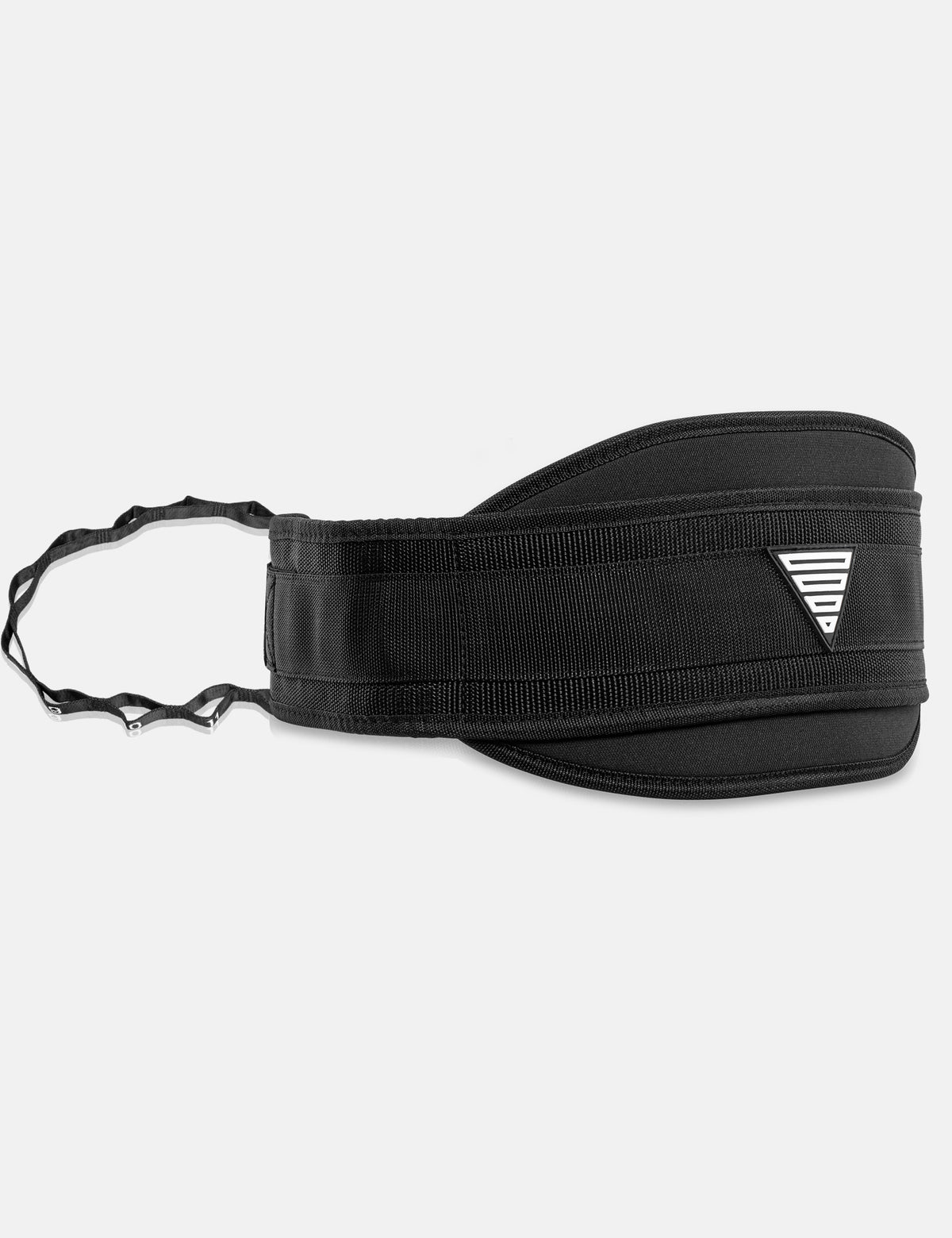
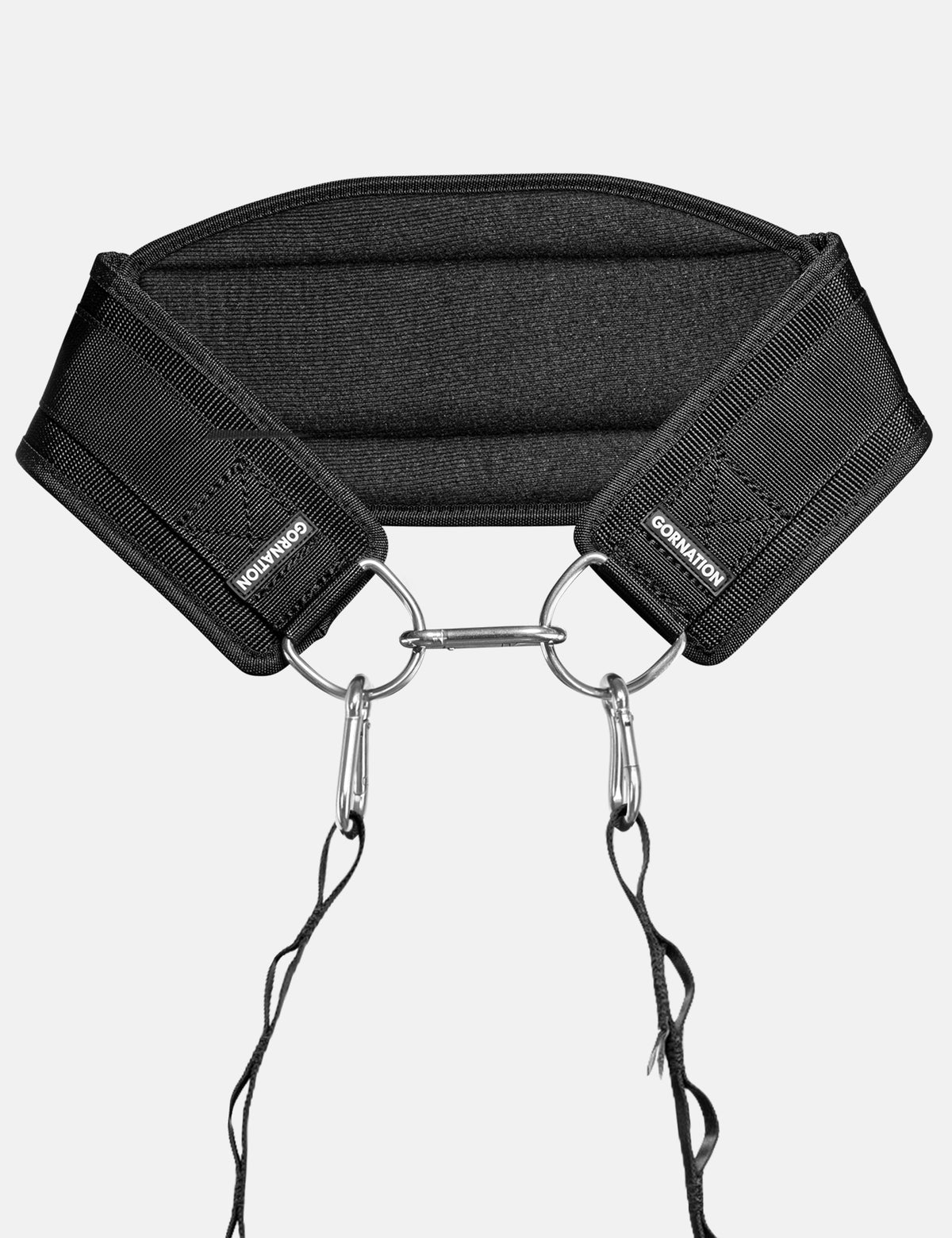
The dip belt is the one piece you can't improvise. It hangs the load between your legs, close to your centre of gravity, so the weight follows your body instead of swinging.
The GORNATION Premium Dip Belt is padded, 84 cm long in one size, and laboratory-tested up to 1000 kg with either attachment. You choose between a stainless steel chain (400 g, 90 cm) and the Rope Pro (104 g, 140 cm): the rope is lighter, sits more comfortably and doesn't pinch, which is why most athletes end up on it. The belt comes with two D-rings, three stainless steel carabiners and a canvas carry bag, and it fits through standard weight plate holes from 30 mm. Our guide on the 7 best dip belt exercises covers what to do with it.

2. Wrist wraps
Extra load goes through your wrists on every dip and every push. Wraps hold the joint so you can push the set rather than protect the joint.
The GORNATION Power Wrist Wraps are the version for heavy work: 45 cm long, 8 cm wide, with a hook-and-loop closure and a thumb loop, which limits range of motion and maximises stability. Use them for your working sets only. Our article on why you should use wrist wraps explains the difference with the longer Performance version.

3. Workout grips
Under load, your grip and your skin fail before your back does. Grips put leather between your palm and the bar and stop the bar rolling in your hand.
The GORNATION Workout Grips are made of genuine leather with a polyurethane coating, come in sizes S, M and L and include an integrated wrist support. They work alongside chalk, so you can use both on your heaviest sets.

4. Resistance bands
Bands work in both directions: they assist when a movement is too hard, and they add resistance when you have no plates. They're also the fastest way to warm up your shoulders before a heavy session.
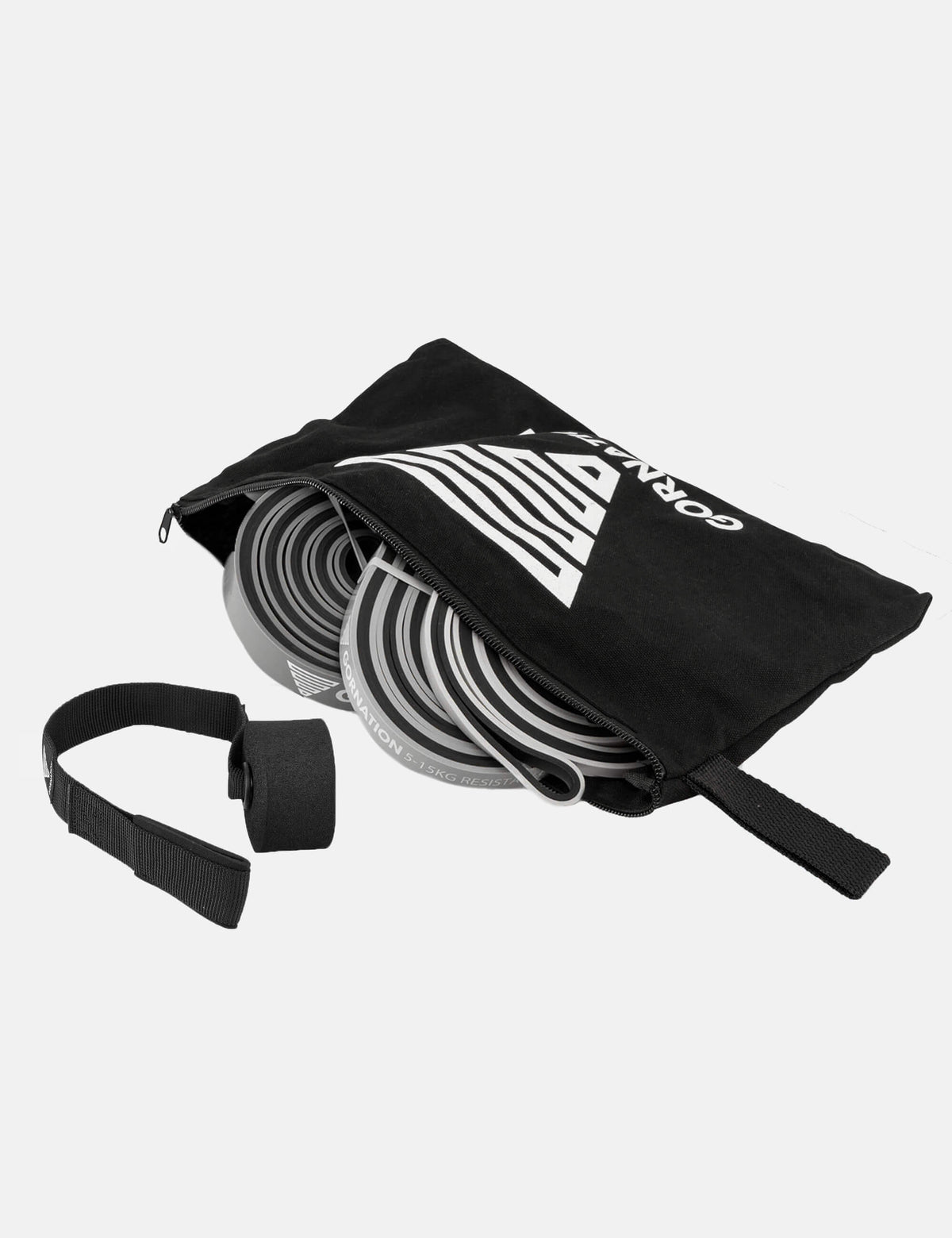
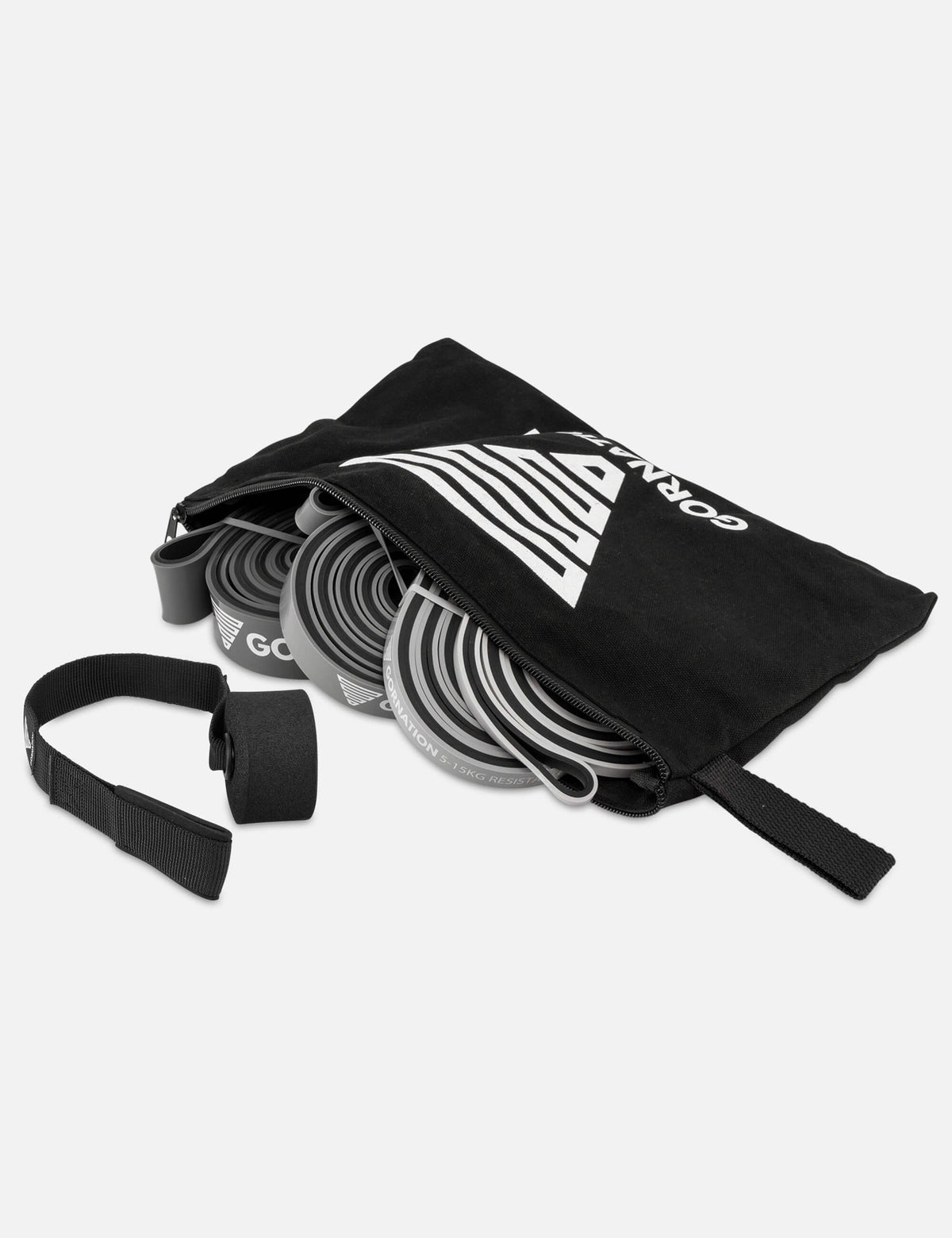
The GORNATION Premium Resistance Bands are 208 cm long, in two-layer natural latex, and come in four strengths from Ultra Light (2-7 kg) to Heavy (20-40 kg). Our article on 10 exercises with resistance bands has the details.

5. Elbow sleeves
Elbows take the brunt of weighted dips and heavy pushing, and the ache usually shows up the day after. Compression around the joint keeps it warm and supported through the session.
The GORNATION Elbow Sleeves are made of 65% nylon, 30% polyester and 5% elastane, come in sizes S to XL and support the forearm and upper arm attachments. They support a joint, they don't repair one: if pain persists, see a health professional.

6. Liquid chalk
A bad grip costs you the last one or two reps of a set you still had the strength for. Chalk absorbs the sweat on your palms and increases friction against the bar.
The GORNATION Premium Liquid Chalk comes in a 200 ml bottle, dries in seconds, leaves no dust and lasts 2 to 5 months with regular use. Wash it off with soap and water after training.

Mistakes to avoid when you add weight
- Adding load before the form is clean. Weight magnifies whatever your technique is doing, good or bad.
- Jumping in 5 kg steps. Move in 1.25 or 2.5 kg increments; the small jumps are what keep the progression going for months.
- Turning every session into a max attempt. Testing your 1RM every week gives you fatigue, not strength. Test it every 8 to 12 weeks.
- Skipping the deload. The fourth week is what lets your tendons catch up with your muscles.
- Cutting the range of motion. A half pull up with 20 kg is worth less than a full one with 10 kg.
FAQ: weighted calisthenics
When should you start weighted calisthenics?
Once you can do around 12 to 15 clean pull ups and 15 to 20 clean dips with full range of motion. Below that, your reps are still building the strength base, and adding load mostly adds injury risk. If you're close, spend a few weeks polishing your technique first.
How much weight should you start with?
Find the load that lets you do 5 hard but clean reps, which for most people is between 5 and 10 kg on pull ups. Build your block around that number and add 2.5 kg only once you can hit 5 sets of 5 with it.
Dip belt or weight vest?
A dip belt carries the load low, close to your centre of gravity, and lets you add or remove plates in seconds, which makes it the tool for heavy pull ups and dips. A weight vest spreads the load across your torso and suits push-ups, squats and conditioning work, but its weight range is fixed. For strength work, start with the belt.
How often should you train weighted calisthenics?
Two heavy sessions a week works for most athletes, with at least one full rest day between them. Use the other sessions for skills, technique and bodyweight volume. Tendons adapt more slowly than muscles, so more heavy sessions rarely means more progress.
Does weighted calisthenics build muscle?
Yes. Sets of 5 to 12 reps with added load put your muscles under the mechanical tension that drives growth, which is hard to reach once bodyweight sets run past 15 reps. Combined with enough food and sleep, weighted pull ups and dips build the back, chest, shoulders and arms as well as any machine.
Start your first weighted calisthenics block
Pick your exercise, find the load that gives you 5 hard reps, run the 4-week block and write down every set. In a year, the weight that felt heavy today will be your warm-up. Find your weighted training equipment and start this week.


2 comments
Samuel
What do you mean by “By increasing strength with bodyweight training” more reps?
What do you mean by “By increasing strength with bodyweight training” more reps?
Samuel
What do endurance and weighted calisthenics have to do with each other?
What do endurance and weighted calisthenics have to do with each other?