| 7,000+ Reviews
 Free EU Shipping above 100€*
 400,000+ Customers Worldwide
 Worldwide Tracked Shipping


Resistance bands offer a lot of benefits to your workout and are some of the most popular equipment in the calisthenics scene.
The best thing about resistance bands: The workout can be adapted to any level. No matter if you want to do your first pull-up or learn the front lever. In this blog article, you'll find 10 exercises for every level that you can integrate directly into your workout.
10 exercises aren't enough for you? Then our video with 26 exercises is perfect for you!
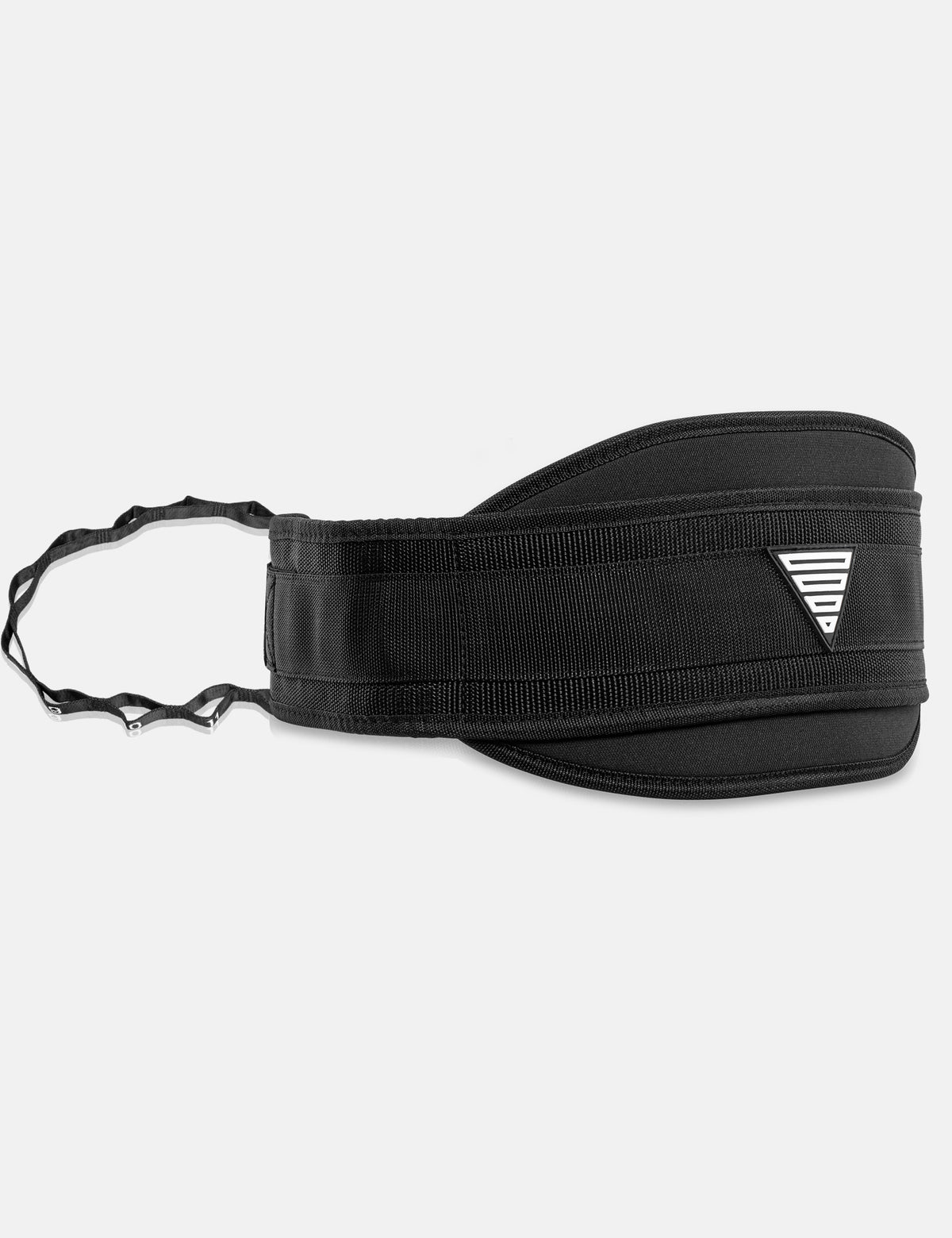
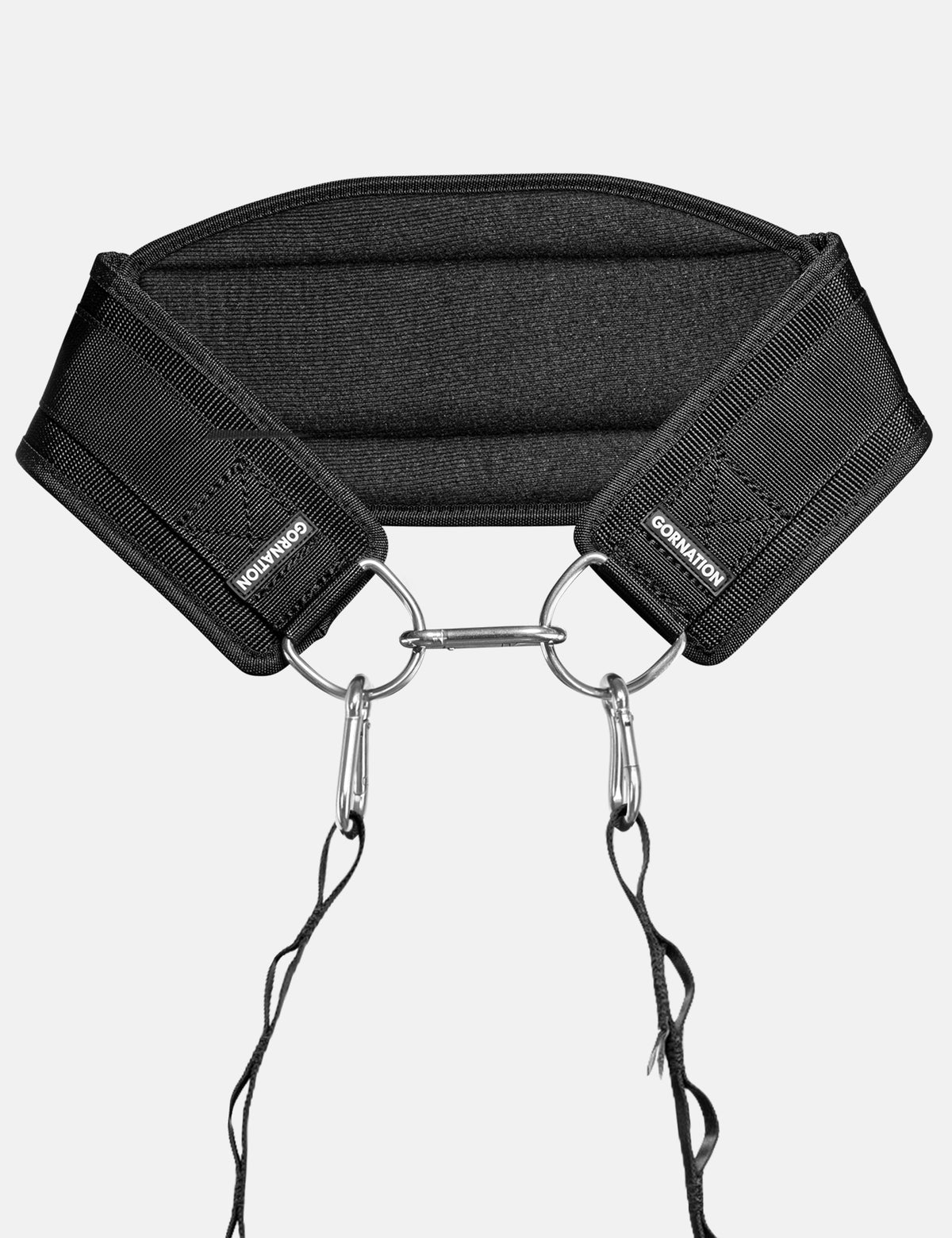
You can either use the resistance band as a support to make exercises like pull-ups or dips easier. Or if you've already mastered the basics, you can also use the resistance bands as additional resistance during your push-ups to make them more challenging. Also recommended is the use of a dip belt to make the workout more difficult. You can read more about this in our blog about the dip belt.
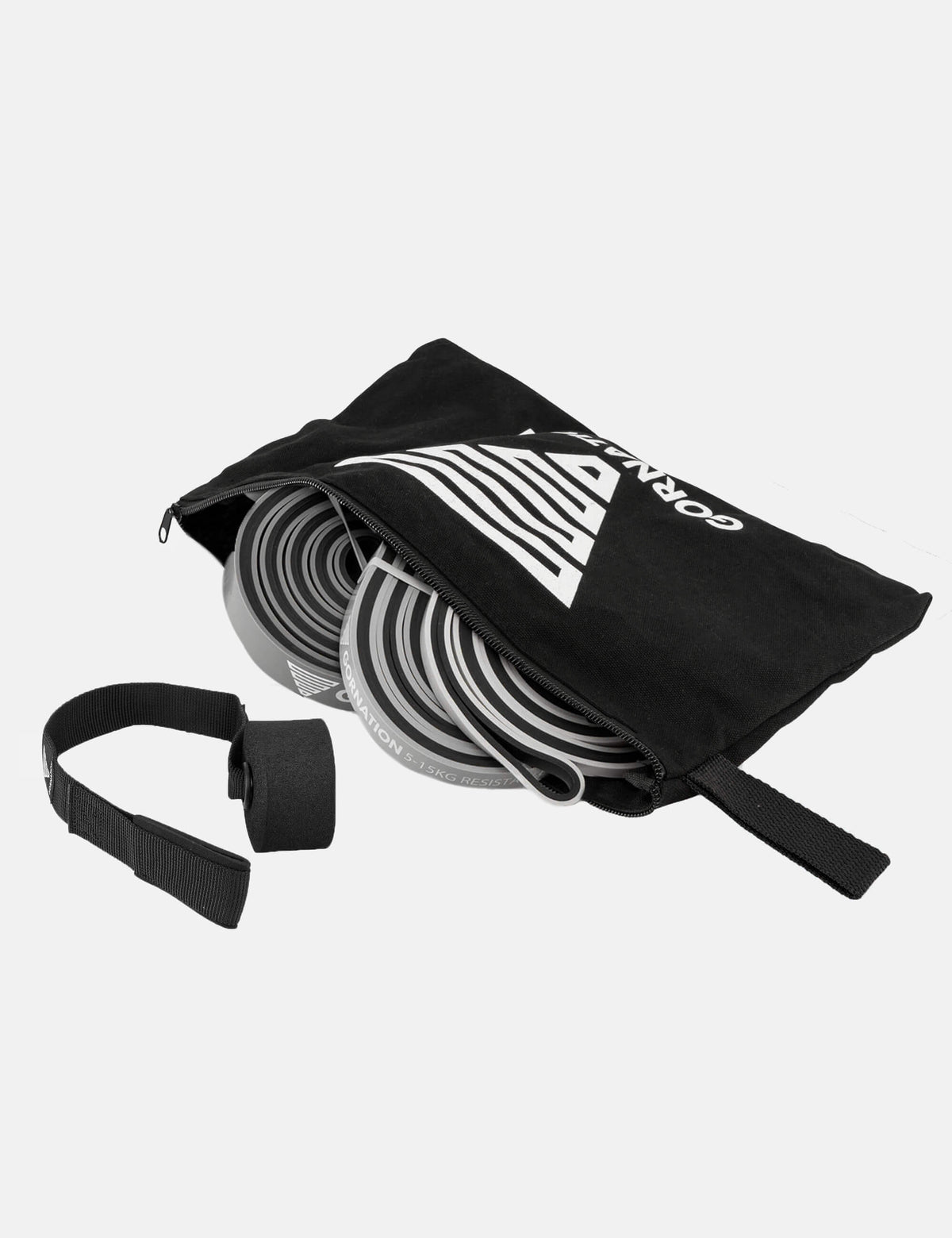
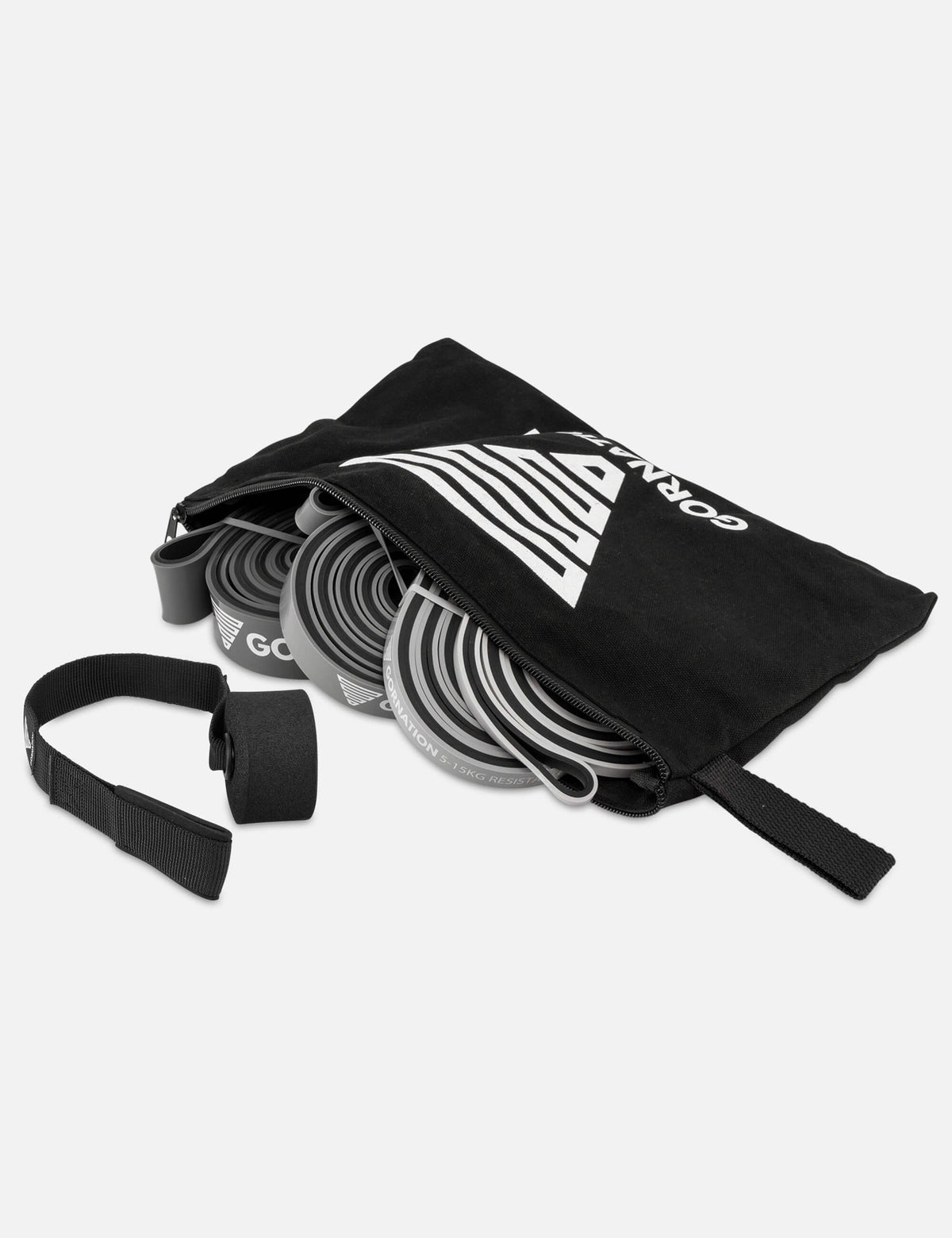
You can choose between 4 different resistance bands to get you closer to your goals. The bands are labeled with the respective kilograms, so you can always keep an eye on your progress.
In addition, the double-layered bands offer longer durability for long-lasting and effective workouts.
It doesn't matter if you're training indoors or outdoors. Training with the resistance bands is possible everywhere. Even at home, you can easily attach the resistance band to your door pull-up bar or directly to your door using a door anchor. If you train at home, our guide on calisthenics at home gives you the full setup.
10 exercises that you can incorporate into your workout:

1. Exercise: Pull Ups
Pull-ups can be made easier with a resistance band, allowing you to do multiple reps or learn your first pull-ups. Attach the band of your choice to the pull-up bar. Pull it down a bit, so you can stand with your feet on the band.
Tip: Take a partner as support in the beginning, as it can be unfamiliar to leave the pull-up position when a slightly stronger band is chosen. Once strict reps feel easy, move on to the weighted pull up or the explosive pull up to keep progressing.

2. Exercise: Push Ups
A resistance band is ideal for push-ups to make them more challenging. Benefit from strength building and muscle growth by giving your body new stimuli. Place the resistance band behind your back and hold it on both sides with your hands.
Tip: Put the resistance band between your upper arm and latissimus to your hands. This position is more comfortable than guiding the band from the outside, along the shoulder to your hands. For more range of motion and wrist comfort, use a pair of parallettes, or try the ring variation from our gymnastics rings exercises guide.

3. Exercise: Dips
Dips are great to learn with the help of a resistance band. Of course, you can also make the dips more challenging, using a resistance band.
Make dips easier: Place the resistance band around the dip bars and grab the band along with the dip bars. Place the feet on the band, just like with pull-ups.
Make dips more difficult: Grab the resistance band with your hands on both hands and place it around your neck so that you are pulled down slightly by the band.
Tip: The band can be pulled tighter to adjust the difficulty of the exercise. Looking for more variations? Check our 50 exercises with mobile dip bars.

4. Exercise: Squats
Squats with your own body weight can quickly become too easy. Here, too, a resistance band is ideal to make the exercise more interesting again. Stand on the resistance band and place it around your neck. In this position, you can then perform squats as usual.
Tip: The band can be pulled tighter to adjust the difficulty of the exercise. For even more load on your legs, add a weight vest.

5. Exercise: Deadlifts
Deadlifts with your own body weight are rarely performed, but this exercise is very effective, especially for beginners. Stand on the resistance band and hold it with both hands. Bend your upper body down and lift it up again. It is very important to keep your back straight.
Tip: The band can be pulled tighter to adjust the difficulty of the exercise. The width of the stance can also be varied to make the exercise more diverse.

6. Exercise: Biceps Curls
With a resistance band, biceps curls are also possible without dumbbells or weights. Stand on the resistance band and hold it with both hands. Your elbows should be held close to your body.
Tip: The band can be pulled tighter to adjust the difficulty of the exercise. Perform the exercise slowly and in a controlled manner to feel the best effect.

7. Exercise: Front Lever
The front lever is one of the more advanced skills in calisthenics and takes some strength and time to master. Resistance bands are perfect to develop a better feeling for the front lever and build more strength. Place the resistance band around your waist first and then over the pull-up bar or dip bar. After that, you can step on the band with your feet and get support for the front lever.
Tip: You can also attach the resistance band in the same way as for the pull-ups. This way, the resistance band will support you a little less. A very good method when you are about to unlock the front lever. Build your progression step by step with the tucked front lever, then the assisted front lever pull up (also done with a band), and finally the front lever pull up.

8. Exercise: Rows
Rowing is also possible in calisthenics thanks to the resistance bands. Simply place the band around a bar or post and grab both ends of the resistance band. With your feet, you can support yourself on the post and thus perform the rowing movement.
Tip: The exercise can also be performed very well in a standing position. If your hands start slipping on the band, a bit of liquid chalk gives you a solid grip.

9. Exercise: Rows with a Door Anchor
Rowing can be done easily at home, without the need for a stable bar. Thanks to the door anchor, you can easily attach your resistance band to your door and thus incorporate rowing into your workout.

10. Exercise: Triceps Push downs with a Door Anchor
Another exercise you can do with the help of the door anchor are the triceps push downs. Clamp the door anchor behind the upper door frame and grab the resistance band at both ends.
Tip: For biceps curls, you can clamp the door anchor behind the lower door frame.

Your Sample Workout Plan with Resistance Bands
Knowing 10 exercises is one thing – putting them together into a structured workout is what actually brings results. Here is a simple 3-day plan that only uses the exercises from this article. Train on non-consecutive days, for example Monday, Wednesday and Friday, and rest 60 to 90 seconds between sets.
Before every session, take 5 minutes to warm up with the band: light rows, shoulder dislocates and a few slow bodyweight squats.
Day 1 – Pull Focus
- Pull-Ups (band-assisted or strict) – 4 sets of 6 to 8 reps
- Rows around a bar or post – 3 sets of 12 reps
- Front Lever holds with band support – 4 sets of 10 to 15 seconds
- Biceps Curls – 3 sets of 15 reps, slow and controlled
Day 2 – Push & Legs
- Push-Ups with band resistance – 4 sets of 10 to 12 reps
- Dips (assisted or with added resistance) – 4 sets of 8 reps
- Squats with band – 3 sets of 15 reps
- Triceps Push Downs with the door anchor – 3 sets of 15 reps
Day 3 – Full Body at Home
- Rows with the Door Anchor – 4 sets of 12 reps
- Deadlifts with band – 3 sets of 12 reps, back straight
- Push-Ups – 3 sets to 2 reps short of failure
- Pull-Ups with a stronger band – 3 sets of 10 reps
How to progress: once a session feels easy, switch to a lighter band on assisted movements (pull-ups, dips, front lever) or to a stronger band on the exercises where the band adds resistance (push-ups, squats, curls, rows). That single change is enough to keep the stimulus high week after week. Track the kilogram label of each band you use, and you'll see your progress in black and white.
You want to learn new skills and bring more variety into your training? Discover now the resistance bands from GORNATION in 4 different strengths.