| 8,000+ Reviews
 Free EU Shipping above 100€*
 400,000+ Customers Worldwide
 Worldwide Tracked Shipping


Choosing the right height for your pull-up bar is one of the most underestimated factors in effective calisthenics training, yet it can make or break your progress. The right height helps you train smoothly, protect your joints, and build strength consistently over time.
But height alone is not the full story. To make your pull-up bar a great fit, you also need to match your body, your training level, and your goals. When these factors come together, your pull-up bar becomes a versatile and long-term training tool that grows with you, whether you train indoors or outdoors.
In this guide, you’ll learn which factors really matter when choosing the right pull-up bar setup and how to find a solution that supports your training from your first pull-up to advanced movements.

Key Factors for Choosing the Right Pull-Up Bar Height
To find the right pull-up bar, it’s important to understand the key factors that influence your setup. The ideal pull-up bar height and construction depend on your body, your experience level, and the way you want to train.
Your body height plays a major role. Ideally, you should be able to hang fully extended with straight arms, without your feet touching the ground. This allows clean repetitions, proper shoulder engagement, and safe technique during every workout.
Your training level is the next important factor. Beginners who focus on strict pull-ups and use little to no additional weight usually do not need an extremely high or heavy-duty setup. More advanced athletes, on the other hand, often require a very stable construction, especially when training with added weight or higher intensity.
Finally, your training goals make a difference. If you mainly want to perform pull-ups and other hanging exercises, a standard bar height is usually sufficient. If your goal includes muscle-ups, explosive movements, or weighted pull-ups, the bar needs to be installed higher and built to handle greater loads safely.
By considering your body height, training level, and goals, you can choose a pull-up bar that truly supports your progress. Now let’s take a closer look at the different pull-up bar types and how to find the ideal height for each one:
Wall-Mounted Pull-Up Bars
Wall-mounted pull-up bars are a popular choice for calisthenics training at home because they offer maximum stability and flexibility in height adjustment. If your wall is high enough, the bar can be installed exactly at the height that fits your body and training needs.
Depending on your body height, the ideal installation height is usually between 220 and 260 cm (7.2 to 8.5 ft). This allows you to hang fully extended with straight arms and without your feet touching the ground, which is essential for clean technique.
The main thing to consider is the mounting surface. A wall-mounted pull-up bar requires a strong and stable wall, such as concrete or solid brick. It’s also worth noting that not everyone wants or is able to drill into their walls, which can be a limiting factor depending on your living situation.
Not sure how to mount your pull-up bar? We actually have an entire Blog how you can install your wall munted pull up bar.

Ceiling-Mounted Pull-Up Bars
Ceiling-mounted pull-up bars offer the same level of stability as wall-mounted pull-up bars, making them a good option for calisthenics training.
The main limitation is height adjustment. Unlike wall-mounted pull-up bars, the height of a ceiling-mounted bar is largely determined by the ceiling itself. As long as the ceiling is high enough, however, this type of pull-up bar becomes a very space-saving and efficient alternative, especially in rooms where wall space is limited.
As with wall-mounted setups, it’s important to check whether the ceiling is structurally stable and whether drilling is possible or allowed.

Doorway Pull-Up Bars
Doorway pull-up bars are one of the most affordable and beginner-friendly options for training at home. They are especially popular because they require no permanent installation and can be mounted and removed within seconds.
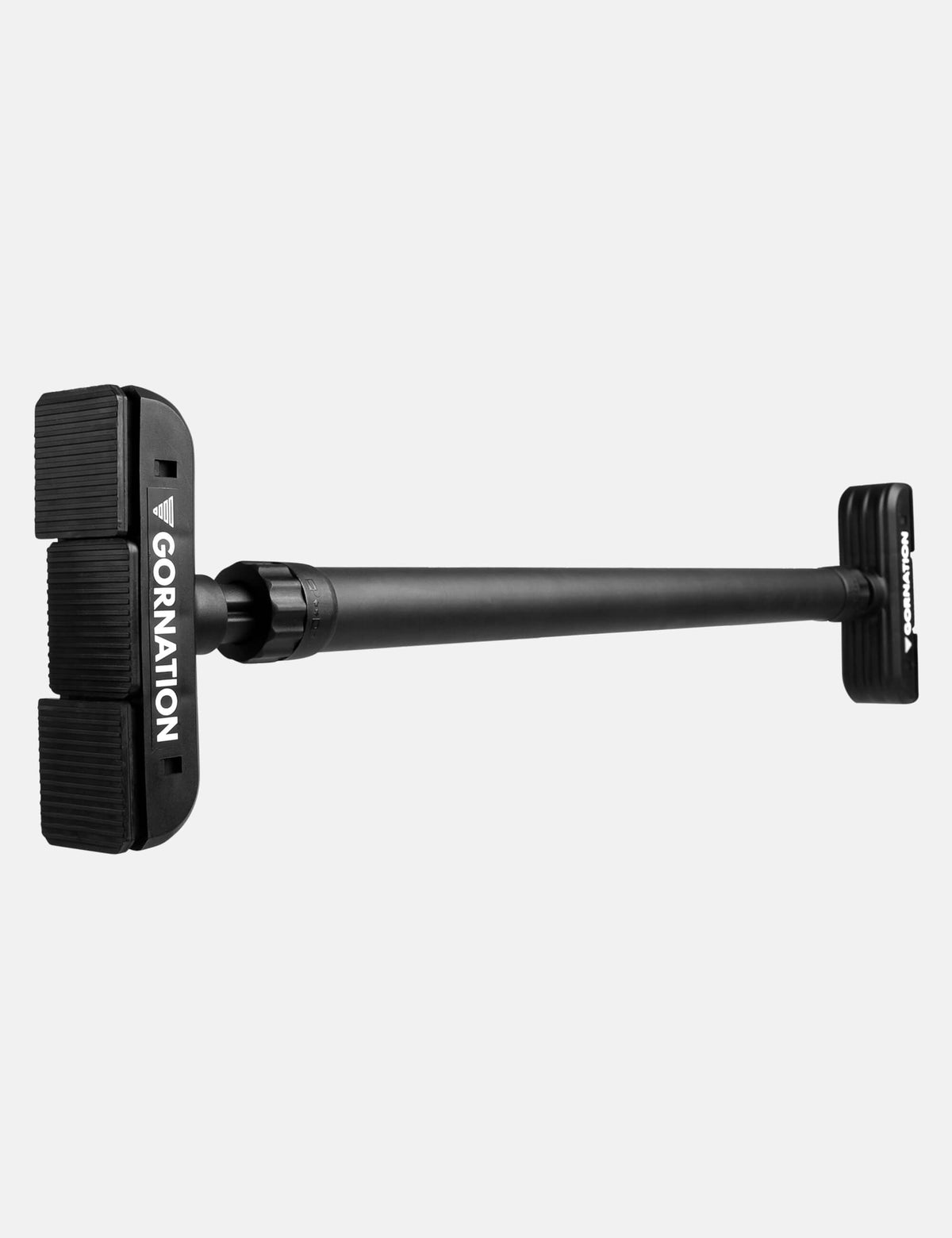
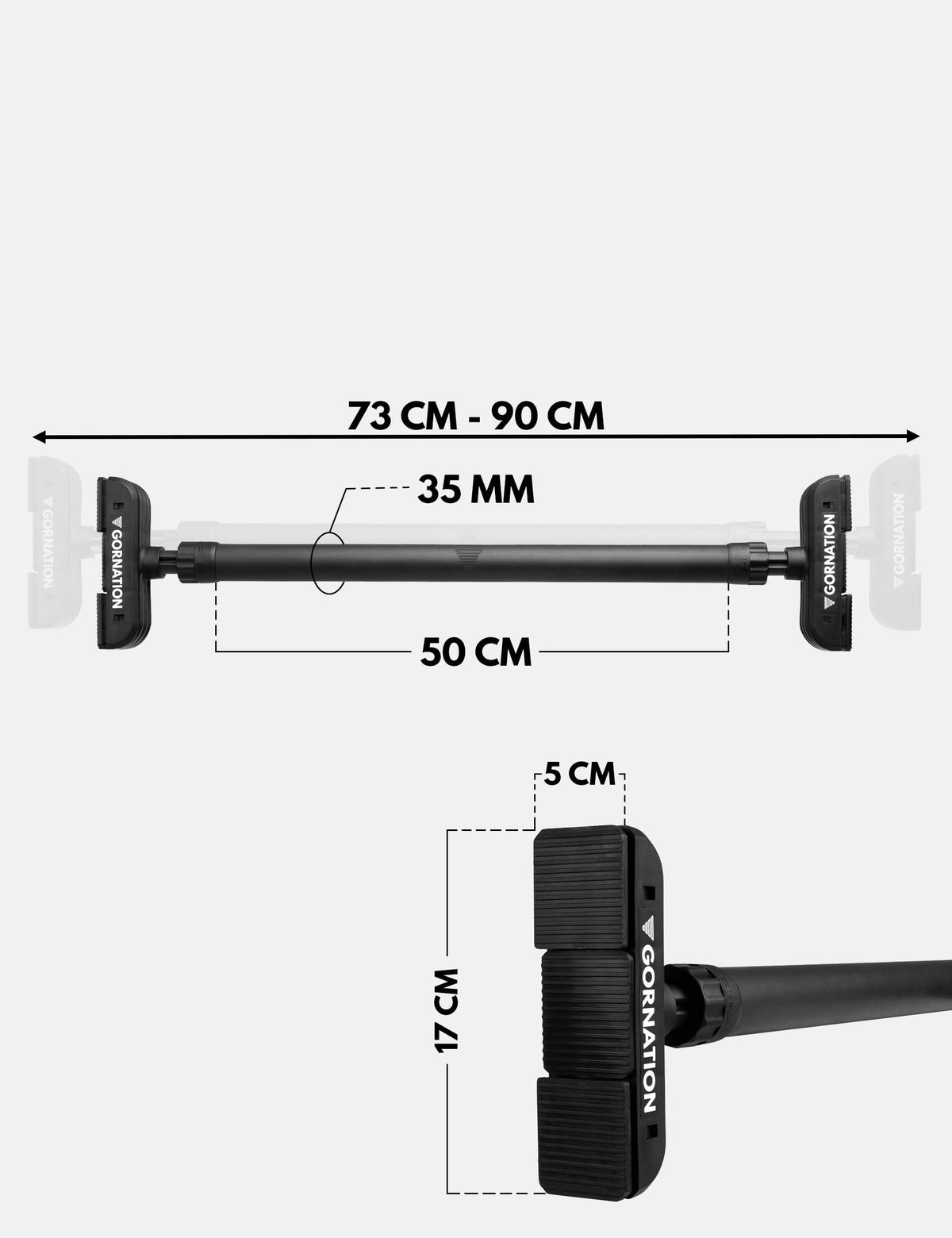
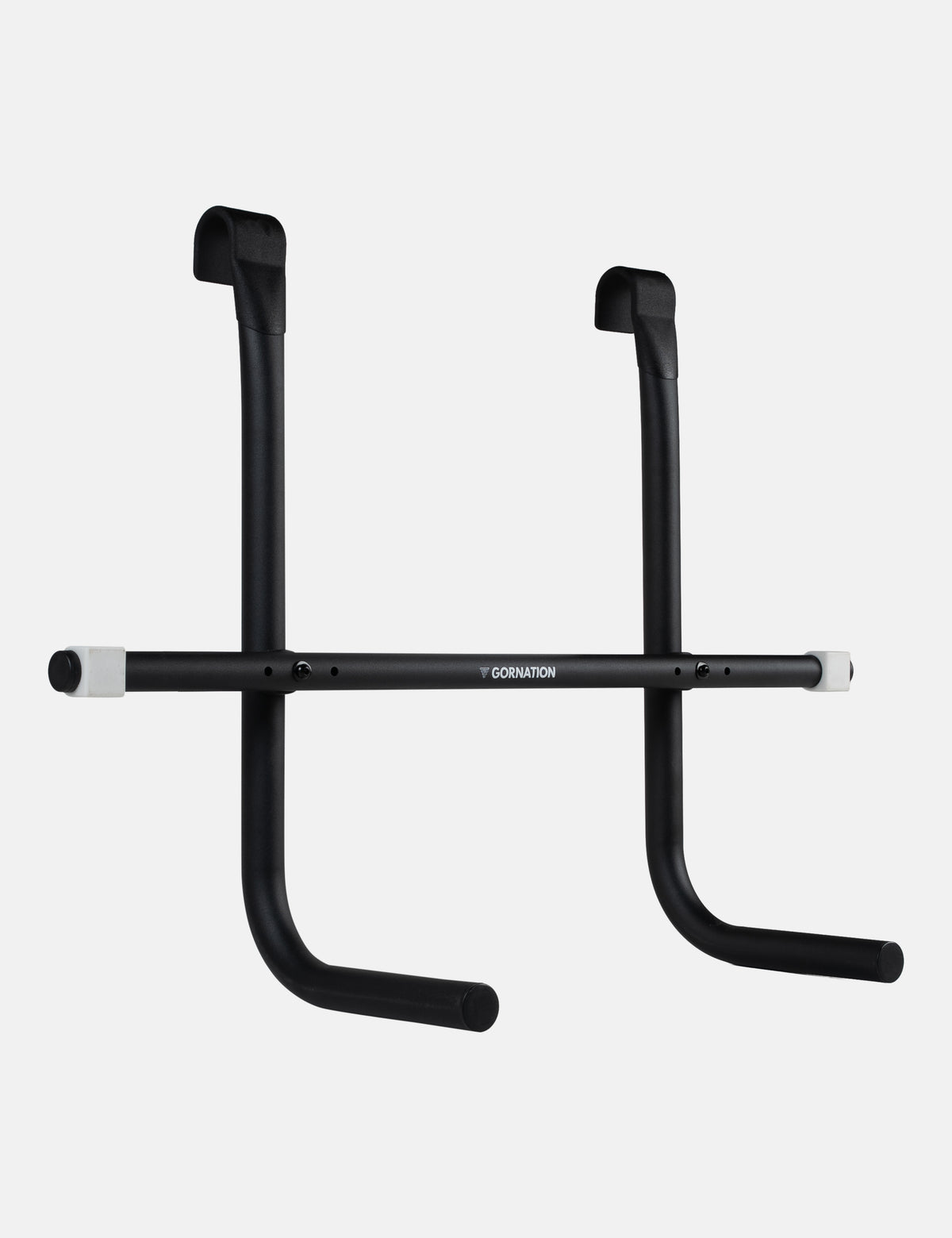
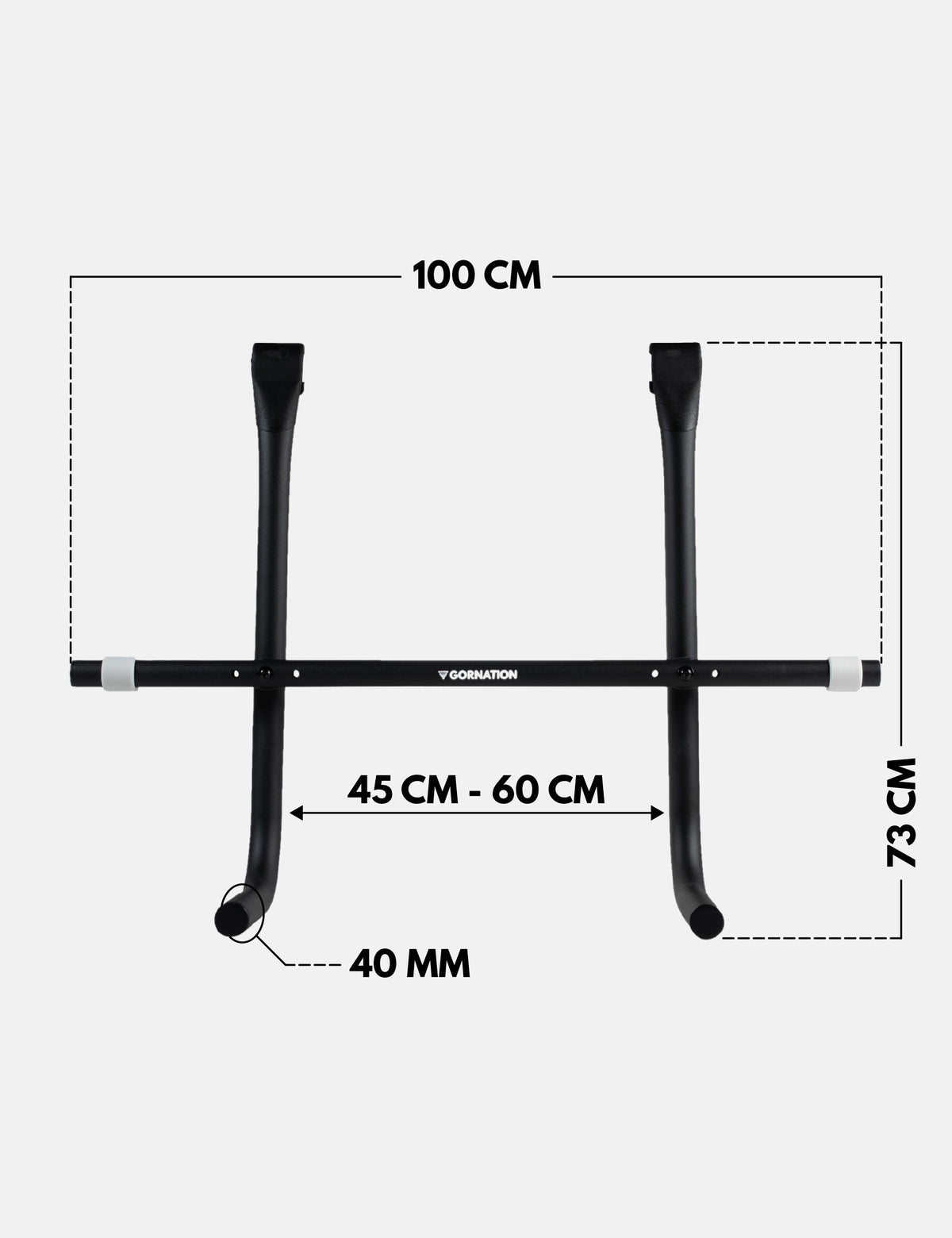
There are two common types of doorway pull-up bars. The Extend-It version is clamped directly inside the doorframe, while the Hook-It version is placed on top of the doorframe and secured by leverage. Both options are simple, effective, and ideal for getting started with pull-up training.
Because doorway pull-up bars rely on standard doorframes, the height is naturally limited. Most doors are between 198.5 and 211 cm (6.5 to 6.9 ft) high. So most people won’t be able to fully extend their legs when hanging.
Not sure which doorway pull-up bar is right for you? Check out our YouTube video:
Free-Standing Pull-Up Station
A free-standing pull-up station is an excellent setup if you’re looking for maximum stability without drilling into walls or ceilings.
With a bar height of around 220 cm (7.2 ft), most pull-up stations are already high enough for many athletes to hang fully extended without their feet touching the ground. For beginners and intermediate athletes, this height is more than sufficient for clean pull-ups.
The main thing to consider is space. Unlike wall- or ceiling-mounted bars, a free-standing pull-up station requires a dedicated area in your home. If you have enough room, it’s a highly effective and comfortable training solution that offers both stability and flexibility.

Bringing It All Together:
Several elements affect the optimal height of your pull-up bar:
-
Your body height
-
The type of exercises you train, such as strict pull-ups or muscle-ups
-
Ceiling height, especially for indoor setups
-
Your training level and long-term goals
-
Whether the bar is adjustable or fixed
-
Your training environment, indoors or outdoors
By taking these factors into account, you can install your pull-up bar in a way that perfectly matches your body, your space, and your training style. The result is safer training, better performance, and faster progress in your calisthenics journey.