| 7,000+ Reviews
 Free EU Shipping above 100€*
 400,000+ Customers Worldwide
 Worldwide Tracked Shipping


Your abs give out before your grip does, or the other way round, and either way the set ends early. Pull up bar core exercises fix that, because hanging trains your abs, your hip flexors and your grip at the same time. Here are 5 moves that take you from your first knee raise to the front lever, plus a weekly ab workout you can run on a single bar at home.
Why train your abs on a pull up bar?
On the floor, your back is supported and your hip flexors do a lot of the work. Hanging removes that support. Your abs have to control your whole lower body against gravity while your shoulders and grip keep you steady, which is why a set of 10 hanging leg raises feels harder than 30 crunches.
Hanging also decompresses your spine instead of loading it, so it's usually kinder on the lower back than sit-ups. And you need nothing else: one bar covers the entire progression from beginner to advanced.
Which GORNATION pull up bar for core training?
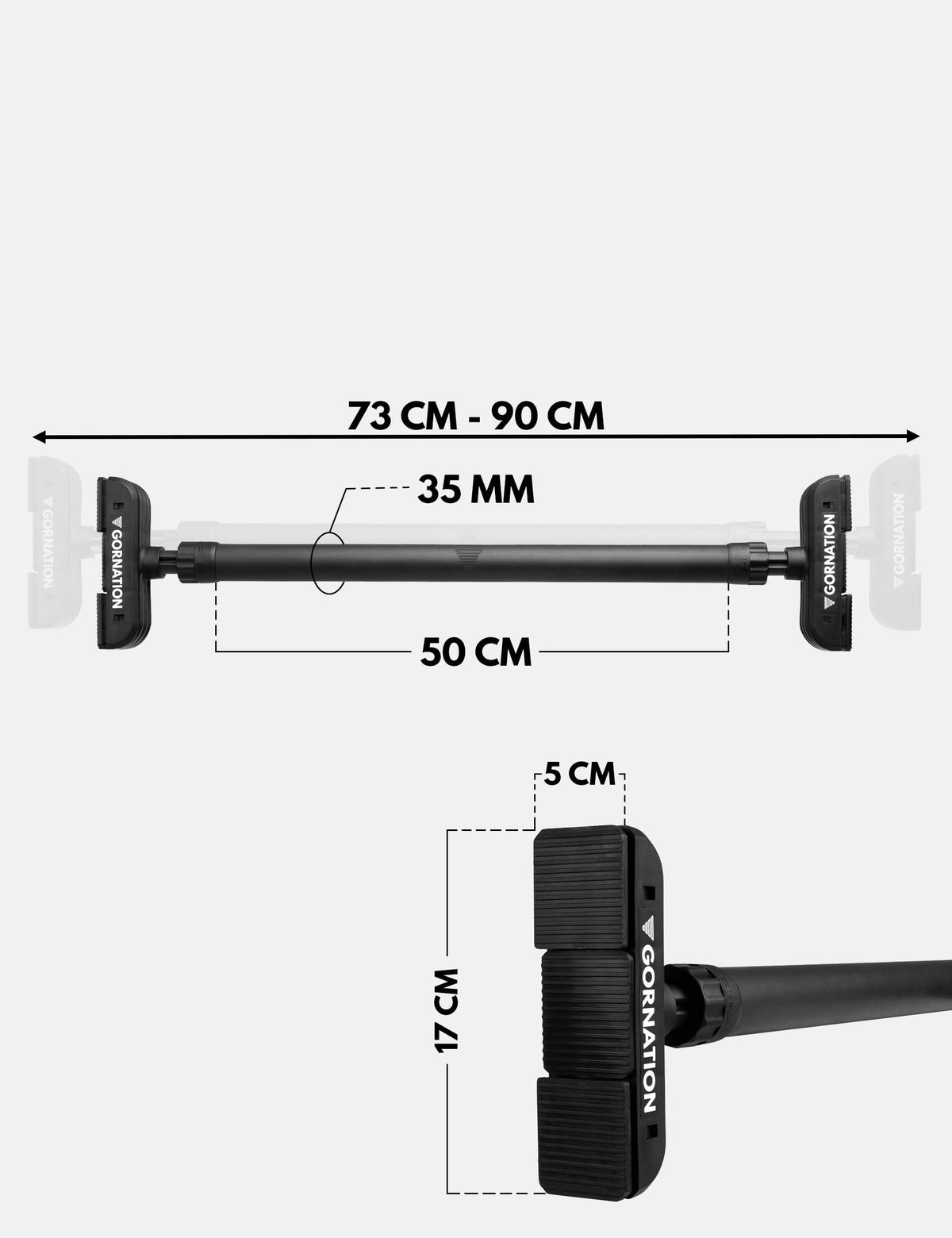
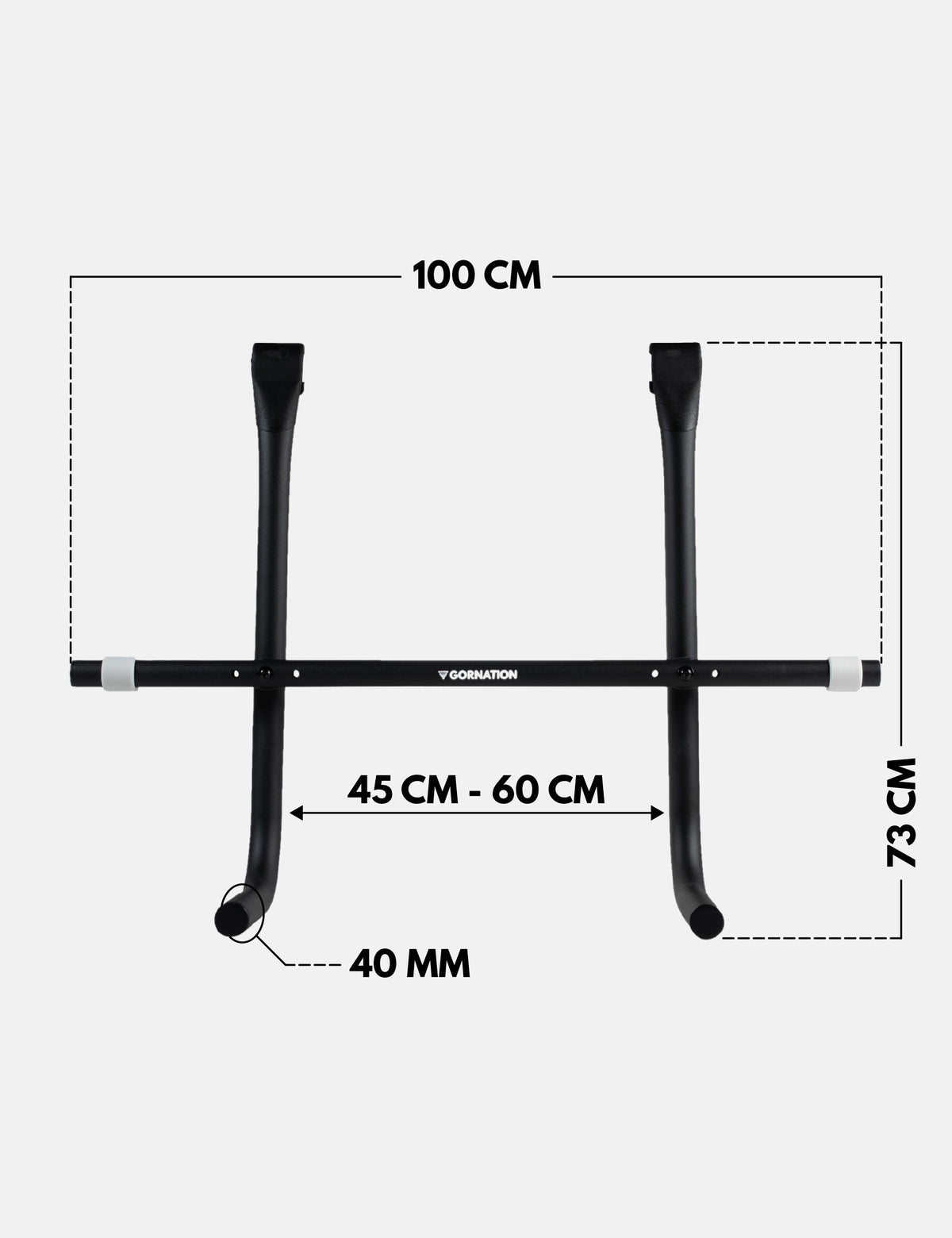
Both bars are powder-coated steel, 96.4 cm long, with a 32 mm matte grip, and both ship with Fischer DuoPower plugs, screws for wood, concrete or brick, a wrench and a 2-year warranty.
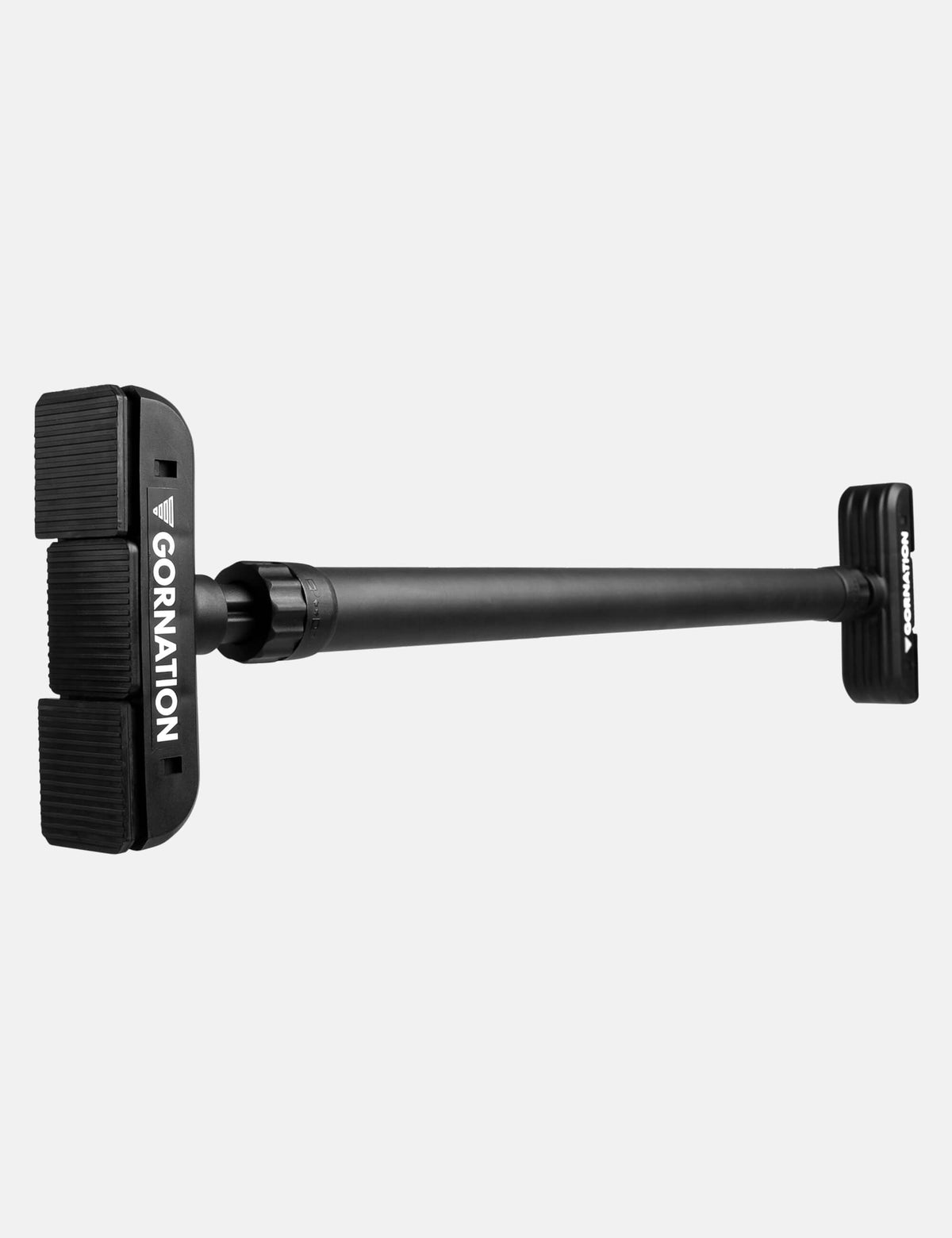
The Doorway Pull Up Bar Uni sits 15 cm from the surface and holds up to 200 kg. It mounts in a doorway or a hallway, which makes it the option for flats and small rooms.

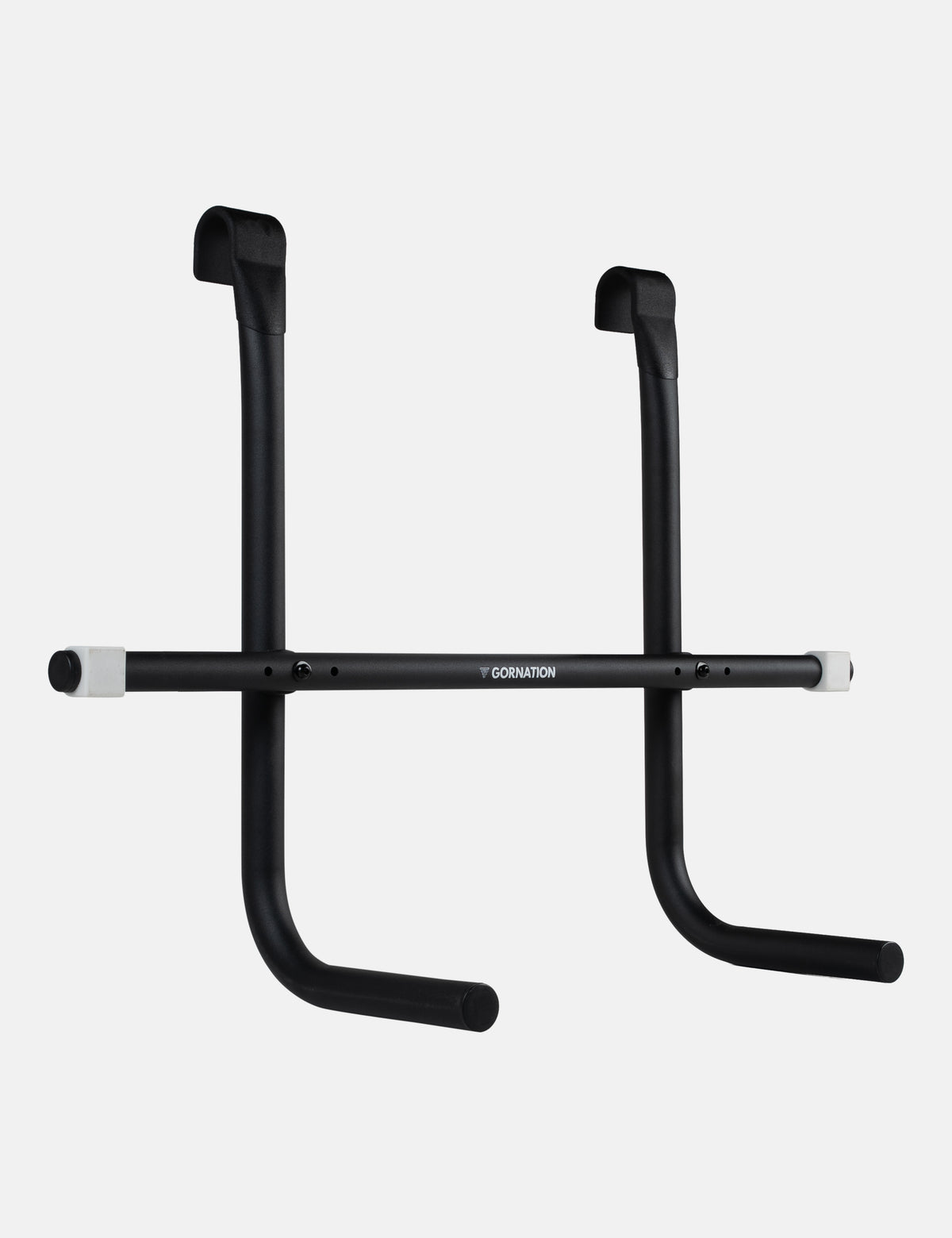
The Ceiling Pull Up Bar Multi gives you 30 cm of clearance on the wall or the ceiling, and holds 200 kg on a ceiling, 120 kg on a wall. For ab work, that clearance matters: your legs swing forward on every raise, and 30 cm is what keeps your heels off the wall.

5 pull up bar core exercises, beginner to advanced
The five moves form one progression. Own each one before you move to the next: rushing to the front lever with a swinging leg raise builds nothing.
1. Knee raises (beginner)
The hanging knee raise is where every ab progression starts. Hang from the bar with an overhand grip, arms straight, shoulders pulled down away from your ears. Tilt your pelvis back first, then raise your knees toward your chest. Lower them slowly, without letting your body swing.
The swing is the mistake that ruins this exercise: if you rock back and forth, momentum is doing the work. Pause for a second at the bottom of each rep and start the next one from a dead hang.
Muscles worked: lower abs and hip flexors, with your grip and shoulders working throughout. Aim for 3 sets of 10 to 12 clean reps before moving on.
2. Side to side knee ups (intermediate)
Same movement, rotated. Hang from the bar, raise your knees toward your right elbow, lower them under control, then repeat toward your left. The diagonal path brings your obliques into the movement, which the straight version barely touches.
Keep your shoulders square to the bar and let the rotation come from your trunk, not from swinging your hips. Slower is harder here, and slower is the point.
Muscles worked: obliques and lower abs. Work up to 3 sets of 8 to 10 reps per side.
3. Leg raises (intermediate)
The hanging leg raise is the reference ab exercise on a bar. Same setup, legs straight: raise them until they're parallel to the floor, knees locked and toes pointed, then lower them slowly to a full hang.
Straight legs make the lever much longer, so expect your reps to drop. If your legs bend or your hips swing, go back to knee raises or do the move with your knees slightly bent until the strength catches up. Once 12 clean reps feel easy, keep going past parallel toward toes to bar.
Your grip usually fails before your abs on this one. Chalk handles the sweat, and our guide on how to improve grip strength covers the rest.
Muscles worked: the whole abdominal wall, hip flexors and quads, plus grip and shoulders.

4. Flutter kicks (intermediate)
Hang from the bar and lift both legs to roughly 45 degrees, then alternate small scissor kicks without letting your legs drop. Where raises train movement, flutter kicks train the hold: your abs stay under tension the whole set.
Work in time, not reps: 20 to 30 seconds per set is plenty at first. Keep the kicks small and controlled rather than fast and floppy. Want more? A weight vest adds load without changing the movement.
Muscles worked: lower abs and hip flexors under continuous tension, with grip endurance as a bonus.
5. Front lever (advanced)
The front lever is where core strength meets pulling strength: your whole body held horizontal under the bar, arms straight. It takes months, so you train it through progressions.
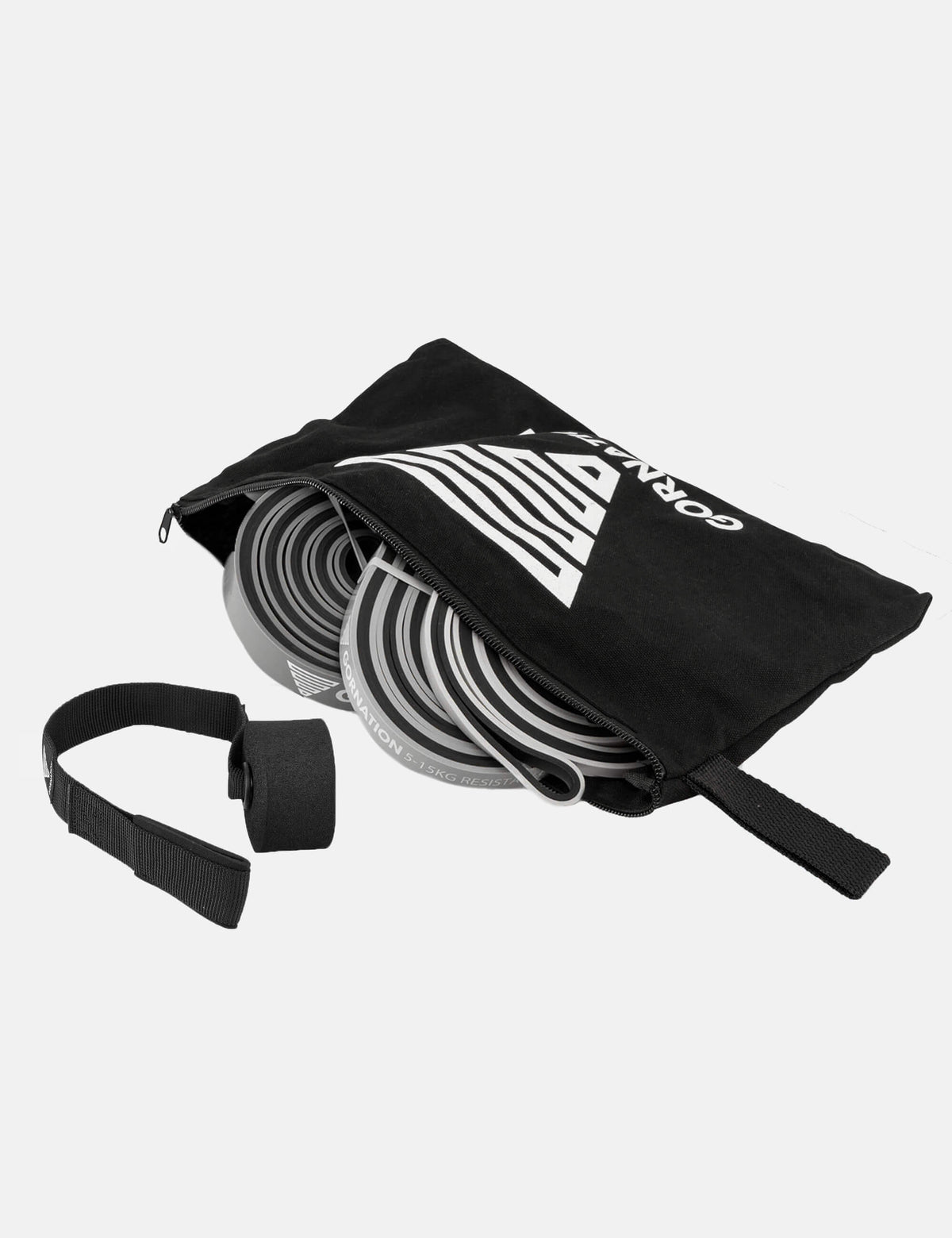
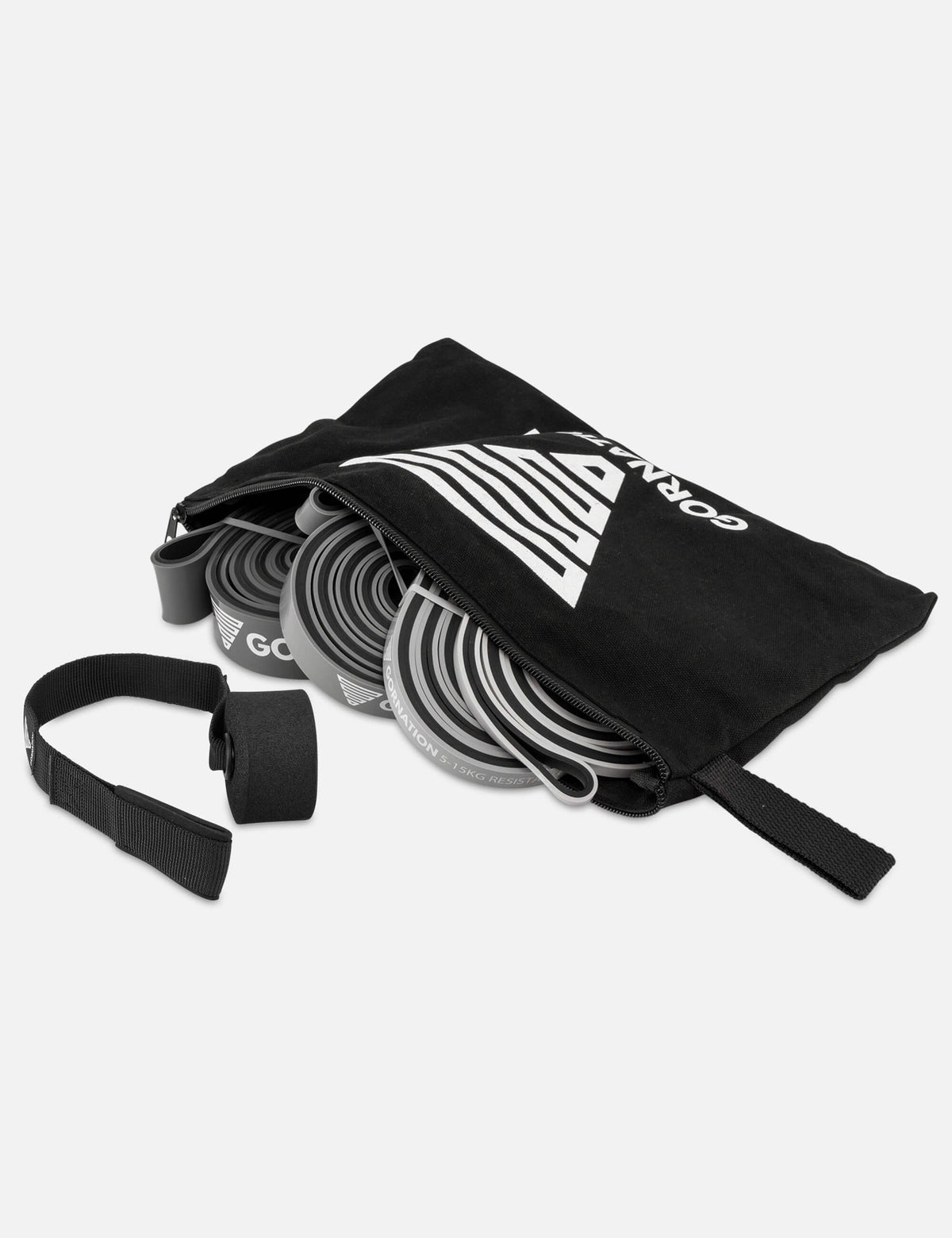
Start with the tucked front lever, knees to chest, hips at shoulder height, arms locked and shoulder blades pulled down. Then open to advanced tuck, then straddle, then full. A Premium Resistance Band under your hips takes off part of your bodyweight while you build the position; the four strengths run from Ultra Light (2-7 kg) to Heavy (20-40 kg), so you drop to a lighter band as you progress.
Muscles worked: lats and mid-back, abs and glutes holding the line, with heavy straight-arm demand on your shoulders and elbows.

A weekly pull up bar ab workout
Train your abs 2 to 3 times a week, at the end of a session, with a rest day in between. Pick your level and move up when you reach the goal in the last column.
| Level | The workout | Sets and reps | Move up when |
|---|---|---|---|
| Beginner | Knee raises, dead hangs | 4 x 8-12, 3 x 20-30 s | You do 12 knee raises with no swing |
| Intermediate | Leg raises, side to side knee ups, flutter kicks | 4 x 8-12, 3 x 8-10 per side, 3 x 20-30 s | You do 12 straight-leg raises to parallel |
| Advanced | Toes to bar, tuck front lever holds, flutter kicks | 4 x 8-10, 5 x 10-15 s, 3 x 40 s | You hold an advanced tuck for 15 seconds |
Two rules beat any programme: control the lowering phase, and stop the set when the swing starts. One more thing worth saying plainly, because a lot of ab articles won't: these exercises build the muscle, but visible abs come from body composition, not from rep count.
Want more variations on the same bar? Our guide to pull up bar ab exercises has 8 more moves.
Accessories that help on the bar
- Wrist wraps: wrist support for front lever work and weighted sets.
- Liquid chalk or powder chalk: which one to use so your hands stop sliding on the bar.
- Parallettes: the floor version of the same core work, for L-sits and planche progressions.
FAQ: pull up bar core exercises
What are the best ab exercises on a pull up bar?
Knee raises for beginners, straight-leg raises and flutter kicks at intermediate level, toes to bar and front lever progressions when you're advanced. Those five cover the lower abs, the obliques and the deep core, and they all run on a single bar with no extra equipment.
Can you build a six-pack with a pull up bar?
You can build the muscle: hanging work loads your abs harder than most floor exercises. Whether they show depends on your body fat percentage, which comes down to nutrition rather than training. Train the bar for strength, and treat the visible part as a separate, kitchen-side project.
How often should you do pull up bar ab workouts?
Two to three sessions a week, at the end of a workout, with a rest day in between. Abs recover like any other muscle. Daily ab training usually means the sets aren't hard enough to need recovery in the first place.
Why do my legs swing during leg raises?
Because you're starting the next rep before the last one has settled, or lowering too fast. Pause in a dead hang for a full second between reps, lower your legs over three seconds, and cut the set short as soon as the swing appears. Controlled reps are what build the strength.
Do you need a special bar for core training?
Any solid bar works, but clearance decides what you can do. The Ceiling Pull Up Bar Multi gives 30 cm of space, enough for leg raises and front lever work without hitting the wall. The Doorway Pull Up Bar Uni, at 15 cm, suits knee raises and hangs in tighter spaces.
Start your pull up bar core workout this week
Five exercises, one bar, and a progression that runs from your first knee raise to the front lever. Start where you are, control every rep, and add the next variation when the current one stops making you work. Find your pull up bar and hang your first set today.
Want more? Our YouTube video shows 17 exercises on the Ceiling Pull Up Bar Multi: