| 7,000+ Reviews
 Free EU Shipping above 100€*
 400,000+ Customers Worldwide
 Worldwide Tracked Shipping


Why add weight in calisthenics and street workout
Bodyweight training offers incredible freedom: you can train anywhere with minimal equipment. But as you progress, pull-ups, dips and muscle-ups at bodyweight eventually stop being enough to stimulate muscle growth and strength gains. That's where weighted training comes in.
The challenges of adding weight to your training
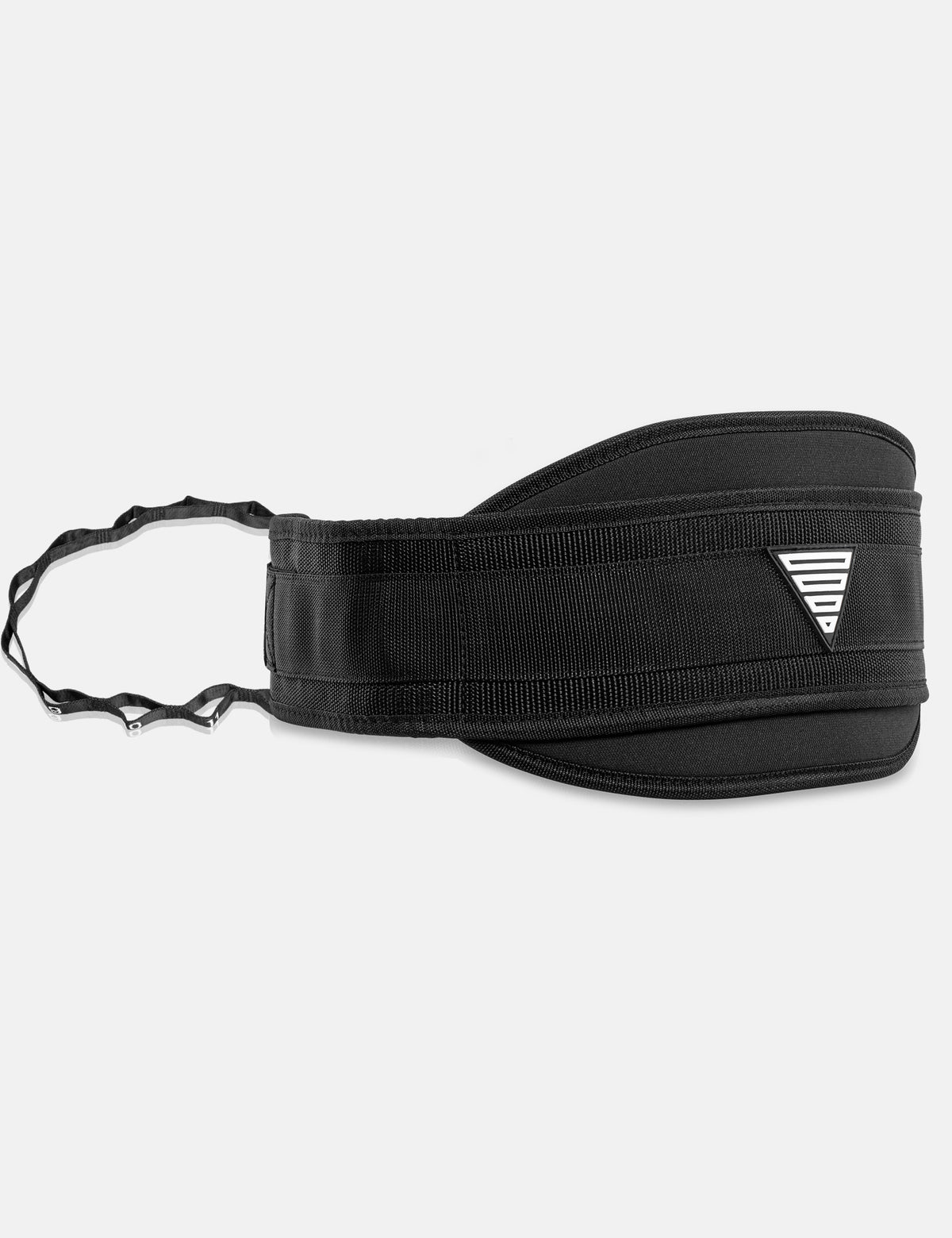
Adding weight to your foundational movements helps maintain progressive overload, the core principle behind any strength or muscle-building progress. Without that overload, your muscles adapt and stagnate. By using a dip belt combined with weight plates or kettlebells, you can gradually increase the intensity of each set. A weight vest can also be a practical option for weighted calisthenics and bodyweight training, especially for movements like pull-ups, dips or push-ups. However, a weighted vest is usually limited in progression, as it can typically only be increased up to 20 kg, while a dip belt allows much more flexibility for long-term strength gains.
But the way you attach the weight to your belt matters a lot. A poorly designed system can restrict your movement, cause skin pinching around the thighs and groin, speed up wear on your clothes and create overall discomfort that hurts your focus.
That's why the choice between a rope and a chain is far from trivial: it directly impacts your freedom of movement, your safety and your enjoyment of everyday training.
The goal is simple: find an accessory that is reliable, practical and durable so you can focus entirely on your performance without worrying about your gear.

Dip belt rope: features, pros and cons
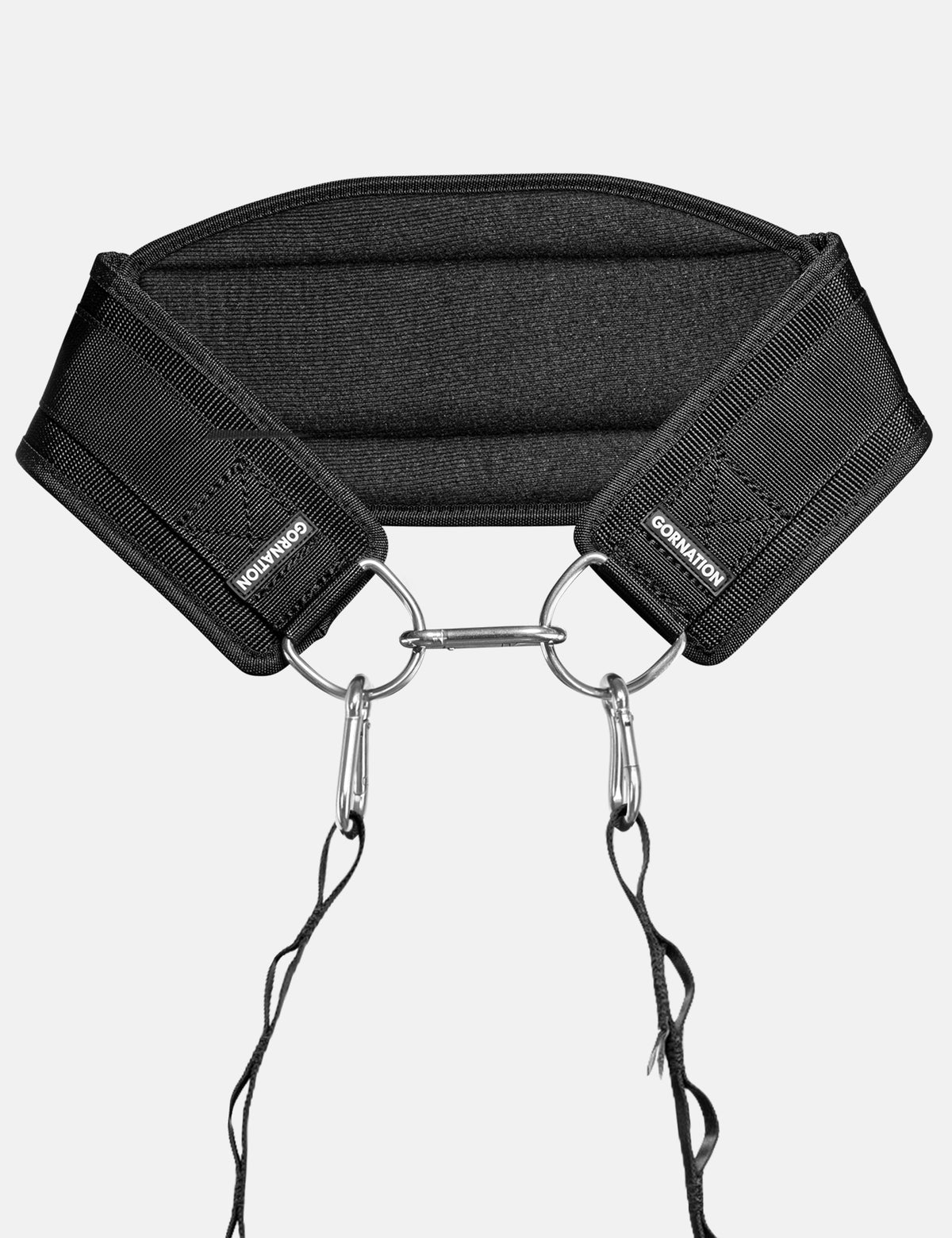
The dip belt rope is a modern alternative to the traditional chain. Made from high-strength polyester, it attaches to your dip belt via a carabiner and threads through the holes of your weight plates or wraps around your kettlebells.
Advantages of the dip belt rope:
- Ultra-lightweight: only about 90 to 104 grams, compared to several hundred grams for a metal chain. You add virtually no dead weight to your setup.
- Soft and safe material: the polyester eliminates the risk of skin pinching and protects your training clothes from friction damage.
- Compatible with all plates: the rope easily fits through the 30 mm holes of Olympic weight plates, making it extremely versatile.
- Adjustable length: you can adjust the rope depending on the number of stacked plates or the size of your kettlebell. Pro versions even feature numbered markings on the loops so you can instantly find your setting from one session to the next.
- Lab-tested strength: modern ropes support impressive loads, up to 250 kg at the loops and 1,000 kg end-to-end for high-end models.
- Easy to carry: it slips into any gym bag without adding bulk or weight.
On the downside, some athletes used to metal may find the rope less "reassuring" visually, even though load tests prove otherwise. Additionally, textile wear over the long term can be slightly faster than a steel chain if you train outdoors on abrasive surfaces.

Dip belt chain: features, pros and cons
The dip belt chain is the classic, time-tested choice for weighted training. Made of steel links, it connects to the belt via a carabiner and supports the weight hanging between your legs.
Its main strength is its extreme durability. Steel resists abrasion, weather and time. A quality chain can last for years without showing any sign of weakness, even in harsh outdoor conditions. For athletes who train on outdoor pull-up bars or at street workout parks, this durability is a real selling point. The chain also has a visual and auditory appeal that some athletes enjoy: the clinking of the links is part of the training atmosphere for many weighted calisthenics practitioners.
Disadvantages of the dip belt chain:
- Extra weight: the chain's own weight adds to your total load, which can slightly skew your tracking if you train with precision.
- Pinching and irritation: the metal links can pinch the skin on your thighs or groin during dips and pull-ups.
- Clothing wear: your workout clothes suffer from repeated contact with metal.
- Bulky and heavy: difficult to carry in a gym bag, especially if you regularly move between different training spots.

Dip belt rope vs dip belt chain: comparison
To help you visualize the differences at a glance, here is a comparison table putting both options side by side on the criteria that matter most for your training:
| Criteria | Dip belt rope | Dip belt chain |
|---|---|---|
| Weight | ~90–104 g | 300–600 g depending on length |
| Material | High-strength polyester | Steel / metal |
| Load capacity | Up to 250 kg (loops) / 1,000 kg (end-to-end) | Varies by link thickness |
| Comfort | Soft, no pinching | Risk of pinching and irritation |
| Clothing protection | Yes | No, fabric wear on contact |
| Portability | Very light, compact | Heavy, bulky |
| Adjustable length | Yes, via loop system | Limited, requires multiple chains |
| Fits through plates (30 mm) | Easy | More difficult depending on thickness |
| Outdoor durability | Good, possible textile wear | Excellent, abrasion-resistant |
| Price | Affordable (from €14.90) | Varies, often more expensive |
| Adjustment markings | Yes (Pro version) | No |
Overall, the dip belt rope wins on the majority of practical criteria: weight, comfort, safety and price. The chain retains an advantage in terms of raw durability under the harshest outdoor conditions, but that remains a specific use case.
Our GORNATION Dip Belt Rope
At GORNATION, we designed our Dip Belt Rope to meet the exact needs of calisthenics and street workout athletes. Developed in Germany by athletes for athletes, it was built to offer the best balance between performance, comfort and durability.
You can choose between two versions:
- The Regular Dip Belt Rope (125 cm, 100 g) at €14.90, ideal for most weighted exercises with plates or kettlebells.
- The Pro Dip Belt Rope (140 cm, 104 g) at €19.90, longer and featuring woven numbers on the loops for precise and quick adjustment.
Both versions are lab-tested with a load capacity of up to 1,000 kg end-to-end and 250 kg at the loops. The 100% polyester material is soft, strong, and fits easily through the 30 mm holes of standard weight plates. The rope is compatible with any Premium Dip Belt equipped with a carabiner. It slips effortlessly into your bag thanks to its featherlight weight and won't pinch your skin or damage your clothes. It's the ideal accessory for athletes who want to train with weighted pull-ups, weighted dips or loaded muscle-ups with complete peace of mind.
Over 400,000 customers worldwide already trust us, and every product comes with a 2 year warranty and a 30-day return policy.

Conclusion: which equipment should you choose?
Today, the trend is clear: calisthenics and street workout athletes are looking for equipment that is lightweight, high-performing and practical. The dip belt rope checks all those boxes and stands out as the most relevant choice for the vast majority of athletes, from beginners to advanced.
If you mainly train in a gym or at a street workout park, carry your gear regularly and want maximum comfort without sacrificing safety, the rope is made for you. The chain remains a viable option if you exclusively train outdoors in extreme conditions and absolute durability is your number one priority.
Our advice? Invest in a quality dip belt rope like ours, pair it with a solid Premium Dip Belt and focus on what truly matters: your progress. Whether it's pull-ups at +40 kg or explosive dips, the right equipment makes all the difference.