| 7,000+ Reviews
 Free EU Shipping above 100€*
 400,000+ Customers Worldwide
 Worldwide Tracked Shipping


Why training your grip strength really changes your daily calisthenics game
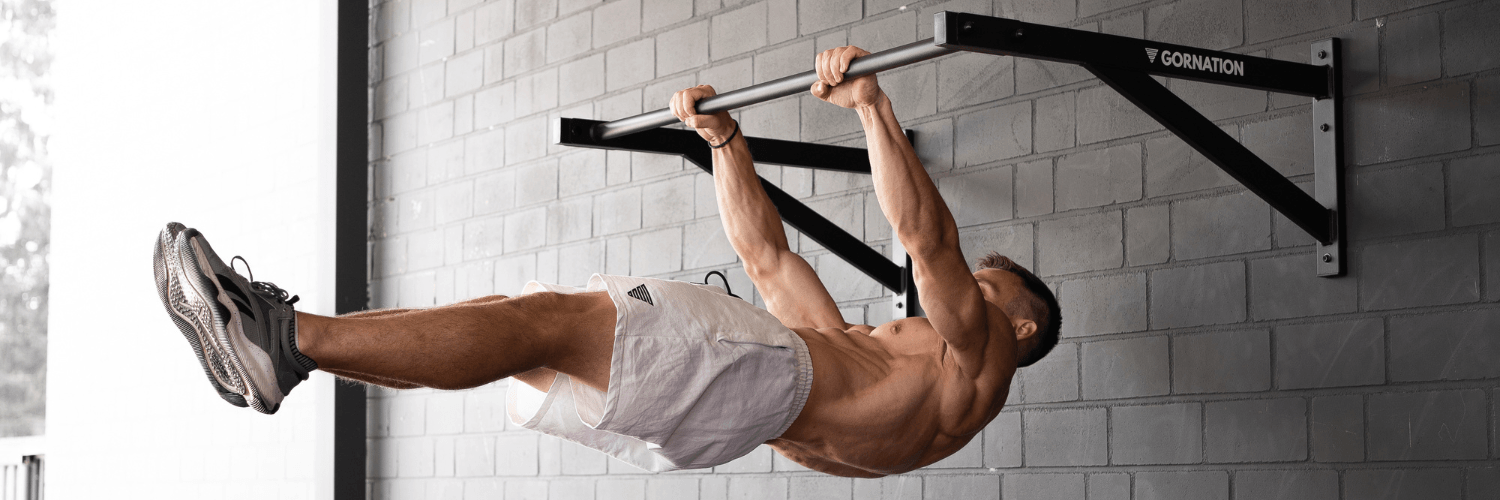
Grip strength is the often-forgotten link in the muscular chain. You can have powerful lats and well-developed arms, but if your hands let go, everything collapses. In calisthenics, every pull-up, every front lever, every human flag starts with one thing: your ability to hold on firmly to the bar. And that's precisely where your grip makes the difference between a failed set and a personal record.
Beyond sports, a solid grip concretely improves your daily life. Carrying groceries effortlessly, opening a stubborn jar, handling heavy loads or simply having a confident handshake, everything relies on your forearms and fingers. Studies even show that hand strength is a reliable marker of overall health and longevity.
On the purely athletic side, developing this area offers several concrete benefits:
- Better endurance on long pull-up sets
- Ability to hold heavier weighted dips and pull-ups
- Increased stability of the wrists during dynamic movements
- Prevention of chronic injuries like elbow tendinitis or epicondylitis
You get the idea, ignoring your forearms is like building a house on sand.

Choosing the right hand grip and using it effectively
Not all hand grips are created equal, and the model you choose will largely determine the quality of your work. Between fixed resistance, adjustable, pinch or ring versions, there's a solution suited to every goal. The key is finding the tool that matches your current level while leaving you room to progress.
How to select the hand grip suited to your level and goals
If you're a beginner, aim for moderate resistance: between 20 and 40 kg for men, 10 to 25 kg for women. The classic mistake is to grab a model that's too stiff, thinking you'll progress faster. The result? You compensate with your wrist, you wear out your tendons and you get discouraged. At GORNATION, our Grip Strength Trainer options come in several resistance levels to support you from your first squeeze all the way to the most advanced performances.
The choice also depends on your goal. To develop grip endurance, useful in calisthenics for holding the bar for long periods, go for a softer hand grip that lets you chain 20 to 30 controlled repetitions. To work on pure maximum strength, opt for a harder model allowing only 5 to 8 intense squeezes. Those into heavy strength training should combine both approaches to cover every performance range.
Your daily use should also guide your purchase. If you want to slip the tool into your bag and train anywhere, a compact and lightweight model is a must. If you're looking for serious training at home, invest in several resistance levels to build real long-term progression.

The most common mistakes to avoid to progress without injury
The first mistake is using the tool without a warm-up. Your forearms contain many small muscles and tendons that deserve minimal preparation. Before any session, do a few wrist circles, slow hand openings and closings, and two or three light squeezes to activate the area.
Second pitfall: crushing the hand grip with only your fingers without engaging the palm. An effective contraction starts from the base of the hand and travels all the way to the tips of the phalanges. This complete technique recruits your entire grip chain and maximizes muscular work.
Another classic mistake: wanting to do too much, too fast. Grip strength develops gradually, and overloading your forearms three times a day will only exhaust your tendons. You then risk epicondylitis, a sneaky injury that takes a long time to heal. Respect recovery periods and listen to your body's signals: elbow pain, numbness or persistent fatigue upon waking are all warnings to take seriously.
Finally, never neglect technique. A sloppy squeeze, done with a bent wrist or in a relaxed position, drastically reduces the effectiveness of exercises and increases the risk of injury. Always keep your wrist aligned with your forearm and engage your hand consciously.
Integrating the hand grip into your long-term training routine
Occasional training produces nothing. It's consistency over several weeks, even months, that creates the neuromuscular adaptations needed for a formidable grip. The advantage of the hand grip is precisely that it fits easily into almost any routine without requiring additional equipment or significant dedicated time.
How often to train to get visible results
The right rhythm is between 3 and 5 sessions per week, with at least one rest day between two intense sessions. Your forearms recover quickly but not instantly, and forcing a tired muscle just wastes your time. An effective session rarely lasts more than 10 to 15 minutes and usually alternates between several work formats.
To structure your sessions, here are the most effective methods:
- Maximum strength sets: 3 to 5 sets of 5 to 8 squeezes at the hardest resistance
- Endurance sets: 3 to 4 sets of 20 slow and controlled repetitions
- Isometric holds: maintain pressure for 30 to 60 seconds, 3 to 5 sets
The first visible results generally appear after 4 to 6 weeks of regular use. You'll first notice better endurance on your pull-ups, then more volume in your forearms, and finally significantly greater raw strength in all your daily activities. Serious practitioners usually reach their progression peak between 6 and 12 months.

Simple tips to train your grip anywhere, every day
One of the biggest advantages of the hand grip is its portability. Slip it into your bag and take advantage of the quiet moments of your day: during a phone call, on public transport, in front of the TV or while waiting for your coffee. A few minutes accumulated daily creates a considerable training volume over the week.
Also vary the exercises to stimulate every muscular angle. Squeeze with the whole hand, then with only three fingers, then with the last two. Alternate pronated and supinated grips. Work with long static holds, then with fast repetitions. This variety in your use creates more complete adaptations than monotonous work.
For strength training and calisthenics practitioners, think about combining the hand grip with complementary exercises like dead hangs (passive bar hangs), close-grip pull-ups, or farmer's walks with heavy loads. Liquid Chalk can also be a great addition to improve your grip during workouts, especially when your hands get sweaty or you train on the bar for longer sets. This global approach will give you the complete grip that makes the difference in the long run.
Hand grip and health: the precautions you should know
Like any training tool, the hand grip requires a minimum of vigilance. Used incorrectly or in the wrong context, it can aggravate existing problems instead of helping you progress.
Medical contraindications and warning signs not to ignore
Certain situations call for caution, or even complete avoidance. Consult a healthcare professional before starting if you have one of these conditions:
- Arthritis or osteoarthritis of the fingers and wrists
- Carpal tunnel syndrome
- Active tendinitis of the elbow or wrist
- Recent injury to the hand or arm
- Circulatory disorders of the extremities
Beyond these specific cases, stay attentive to the signals your body sends you during and after your sessions. Sharp pain during the squeeze, persistent numbness in the fingers, tingling in the arm or loss of sensation are never normal. These symptoms may indicate nerve compression or inflammation that requires rest and sometimes medical advice. Never ignore these warnings just to avoid missing a session.

Recovering properly: stretching, mobility and tendinitis prevention
Recovery is just as important as training itself. After every grip session, dedicate a few minutes to targeted stretches. Open your hand wide with fingers spread apart, stretch your wrists in flexion then in extension while keeping your arm straight, and lightly massage the inside of your forearms to release accumulated tension.
The mobility of your wrist and elbow also deserves your attention. Regularly include wrist circles, forearm rotations in pronation-supination, and chest opening exercises. These simple movements effectively prevent tendinitis from developing and keep your joints healthy over the long term.
Finally, don't forget the fundamentals: adequate hydration, quality sleep and balanced nutrition are the invisible pillars of any lasting progression. A well-nourished, well-rested and well-hydrated forearm recovers twice as fast as a mistreated one.